Our Heritage

When you sit down in your favourite chair to wait for a TV show to start or a guest to arrive or your wife to bring you tea, what do you think about? I can probably guess that your mind wanders backwards.

As we age, our past becomes more relevant, clearer, more interesting! So Peter and I embarked on a series of walks around Toronto this summer to review our city’s heritage. Presented by Heritage Toronto, and sponsored by the TD Bank, these walks take guests to all sort of hidden heritage gems. The walks are usually about 1-2 kilometers and last 1-2 hours. There are lots of stops along the way and one can usually find low walls or benches to sit on while the presenter is talking.

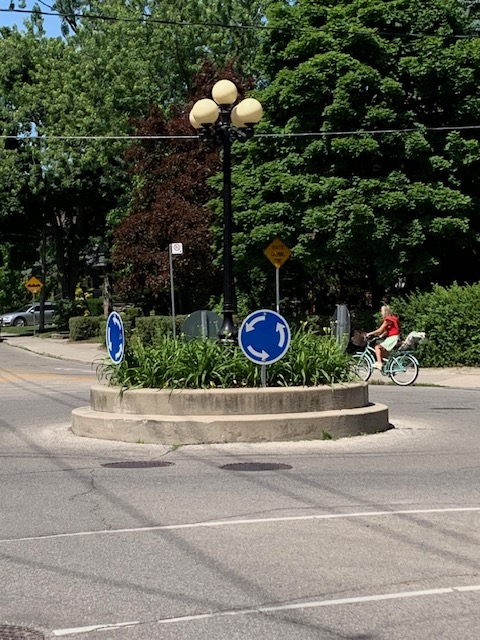
I wrote to you on June 18th about our first walk. We learned that Baby Point began its life as an Indigenous settlement in the 1600’s, then morphed into one of the first subdivisions in Toronto in the early 1900’s, along with another first – a roundabout! We have since gone on more of these walks, all of them interesting glimpses into Toronto’s past.

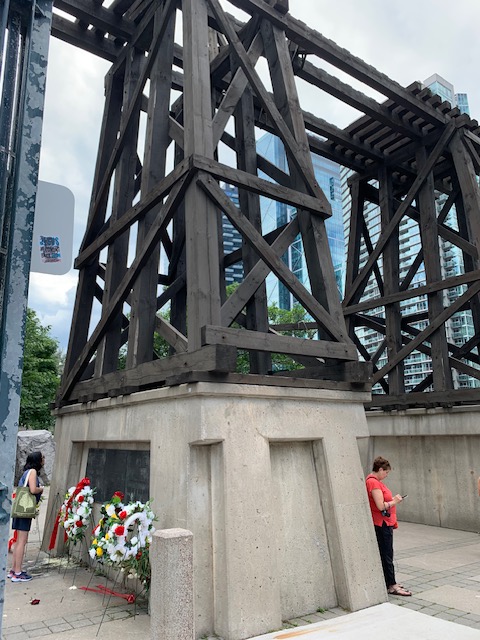
Then we went with another couple on the Rail Lands Walking Tour. The husband of the other couple is a train aficionado, but sadly we didn’t see even one train! What we saw were the places where railroad tracks, stations, maintenance facilities, and offices used to be. We were astounded to learn that the Rogers Centre, the Royal York Hotel, the Metro Convention Center, Roy Thomson Hall, and many intersections and parking lots were once part of the “ribbon of steel” which wove its way through our downtown. And we saw the monument dedicated to the thousands of Chinese immigrants who lost their lives while building this railroad.

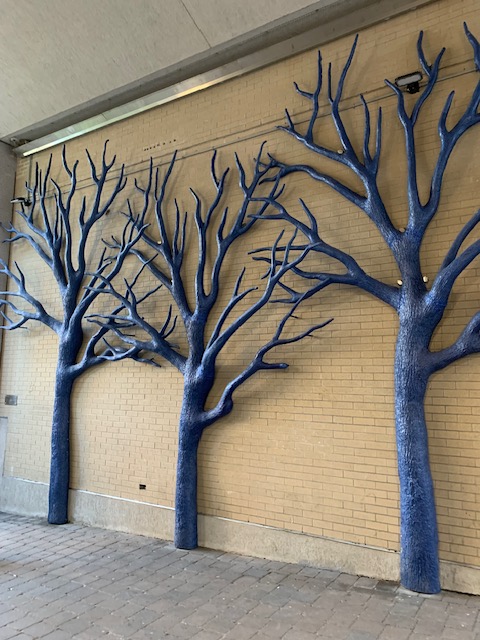
Our next walk was called Yonge Street Architecture. We started at College Park, erected by the Eaton family as the first Toronto department store. We visited the actual College park which was looking a little forlorn with very little grass, but it has a different life in the winter when it becomes a skating trail. We meandered through many parkettes and saw architectural treasures and public art works. It was an interesting glimpse of life behind the facade of Yonge St.

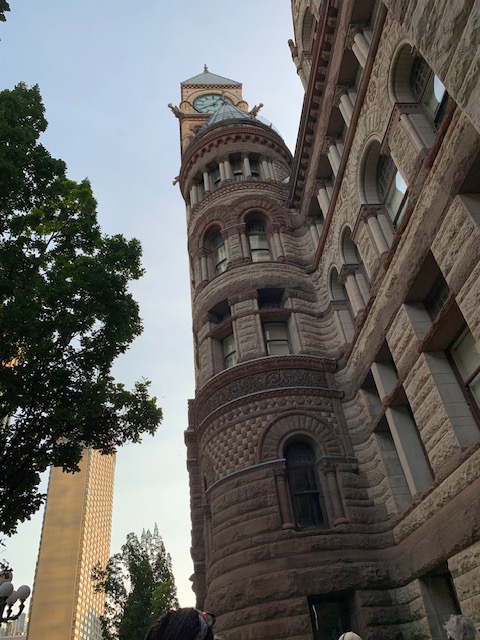
Then we walked to Old City Hall, designed by architect E J Lennox. His accomplishments include Casa Loma and over 70 other buildings in Toronto. City Hall incurred a cost overrun on construction, (that would never happen today!) so City Council refused to install a plaque in Lennox’s honour. As payback, he had his name engraved on blocks on the building’s exterior. If you look under the eaves of the upper floor, you can see these letters: E J LENNOX ARCHITECT 1899.

For our last walk, we chose a tour of Hidden Histories at U of T. We’ve wandered around the campus many times, both as adult students and as tourists, and we wanted to get the inside scoop. Our tour happened to be scheduled on a rainy day, which is quite common this summer, but this rainy day included thunder and lightning so we opted for tea at home instead.

There are lots of other tours to choose from, including Greektown, The Danforth, Little India, and one that sound ah… different: Garbageland Cycling Tour, in case you want to see the city’s trash. The cost per tour is under $10 per person, pretty reasonable for a chance to get some exercise and learn about Toronto’s past.

Sue
The Lamp

Peter is a man of many skills and talents: athletics, gardening, finance, cooking, window-washing, kayaking, to name just a few. But electrician is not on the list.

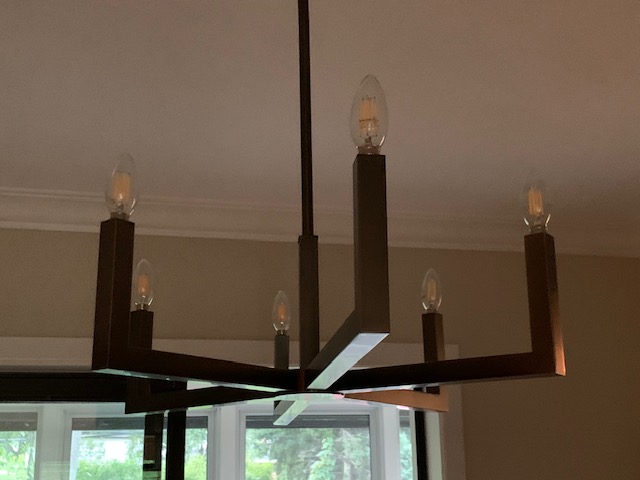
After we moved into our new home, actually before we even signed the papers for our new home, I despaired over the dining room chandelier. It was utilitarian and ugly. But buying a new one would be easy compared to having it installed. So I put it off and put it off. Until one day… I was out with my decorator friend when we happened to wander into a lighting store and she almost shouted at me: “THAT is the chandelier you should have!” I made the purchase.

i had a few sleepless nights trying to figure out how to get it from the box to the ceiling. My son James overheard me at some point and offered to install it. I had forgotten that his dad had studied electricity and had passed this knowledge on to his son. On the appointed day, James arrived on time, with the correct tools, and went to work. He did a professional job. The price was right too – a free lunch.

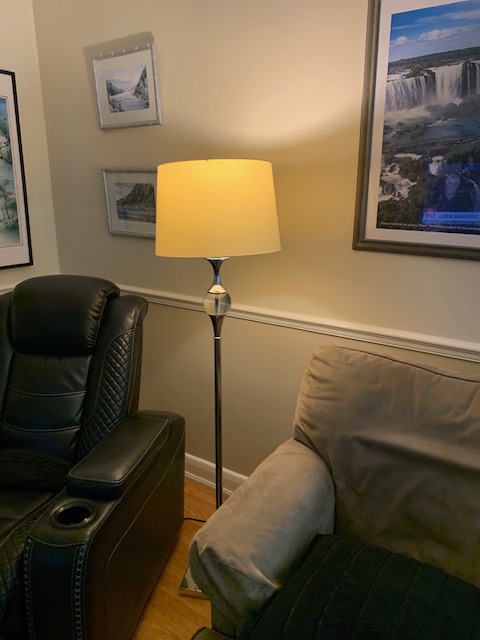
A couple of days ago a living room floor lamp, one matching 2 table lamps, stopped working. We replaced it with an old lamp that had been sent to the basement. But it didn’t match the others and was an unusual style. I certainly couldn’t invite anyone to visit with this abomination in the living room. So I invited myself to have lunch with James at his place, about an hour’s drive away. I snuck the broken lamp into my trunk.

James good-naturedly got out his tools again and studied the lamp. He found the offending um…part thing.. which we needed to replace. We ordered it on Amazon and he told me that, when the doohickey arrived, he would visit me and do the rewiring. This seemed like a lot of driving for just one lamp, so I took a bold step and asked: “Can you show me how to do it, and maybe I can fix it by myself? Isn’t it just about black and red wires matching up?”

James shook his head. “Oh Mom, it’s pretty hard to figure out. It’s not black and red; it’s gold and silver. I’d better do it.” I went home with the broken lamp, and a broken spirit. Ok sorry. Too dramatic.

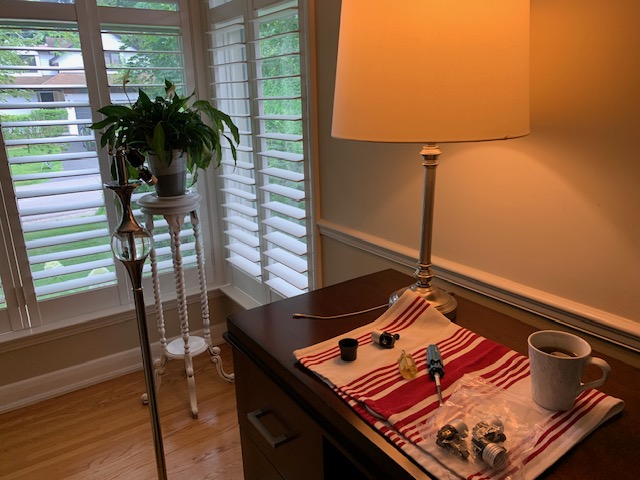
When the new thingamajig (actually 4 of the same new thingamajigs in one package) arrived a couple of days later, I was determined to fix the lamp. Peter told me I’d better work on it outside in case something exploded. Really! No support from the men in my life at all! I deliberately set up my work station in the living room, but close to a window just in case.

Work station. The broken floor lamp is on the left.

In no time at all I had the gold and silver wires matched up and the lamp re-assembled. Ta Dah!

I still have 3 brand new thingamabobs left. So, if you break one, I can easily fix it for you.

Sue
Unaffordable Housing

During the last couple of weeks I’ve been mostly stuck at home, seated by the front window, unable to go out. The suspense has been riveting.

Our neighbours across the street when we moved in were a couple in their 90’s, with a single daughter looking after them. We rarely saw them, except when the daughter escorted them into the car and off to a doctor’s appointment, or when an ambulance siren ended in the driveway. Occasionally the daughter shovelled the driveway or, even less occasionally, cut the grass. Then, in the fall of 2022, the parents died and the daughter moved out. The house became eerily quiet; there were no lights on and the tall grass was covered with snow.

Six months later things began to happen. Construction crews came into the scene. A dumpster was delivered and soon replaced by another and another. Garden tools, toilets, and outdoor furniture lined the boulevard. A rusty car was towed from the driveway. New windows were installed. The house was painted. We were delighted – new neighbours were on the way.

Then abruptly, everythig stopped. There were no moving vans, or “for sale” signs. The grass started growing again and the new windows began to get dusty. We speculated about what was going on. Had the owners run out of money to finish the inside? Were interest rates too high for a quick sale? Had the daughter fought with the other relatives and demanded a larger share of the profit?

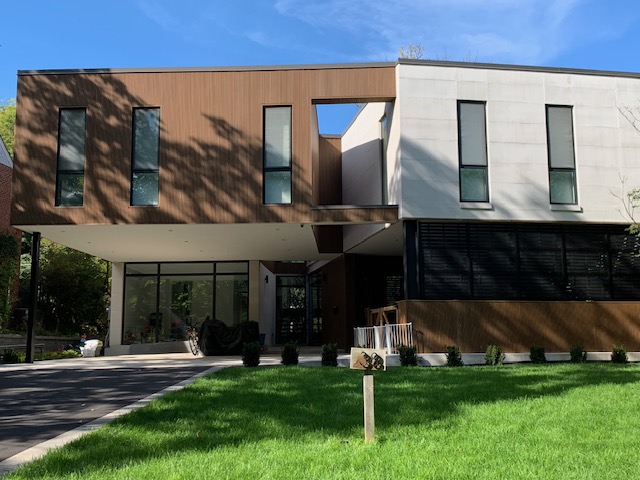
Meanwhile the house beside us had undergone a similar transformation. The old house that had been next door when we moved in had been demolished and replaced by a huge modern behemoth. It was just beginning to look like a house when the construction crews disappeared. The siding was not finished. There was no garage. And the front yard was several meters high with weeds. Then, about 2 years ago, the new family moved in.

They were a lovely couple with 3 small children. They apologized for the look of their house, and promised to plant grass very soon. We waited and waited. They built a playhouse for the kids, but no sign of a garage. The tools, tires, wheelbarrow, and garbage cans all waited on the front patio. The weeds grew higher and higher. Was grass seed so expensive due to inflation? Was there no contractor who could build a simple garage in front of a house?

The unappealing view from our front window was: a deserted house across the street and an unfinished one beside us. We were embarrassed to invite visitors.

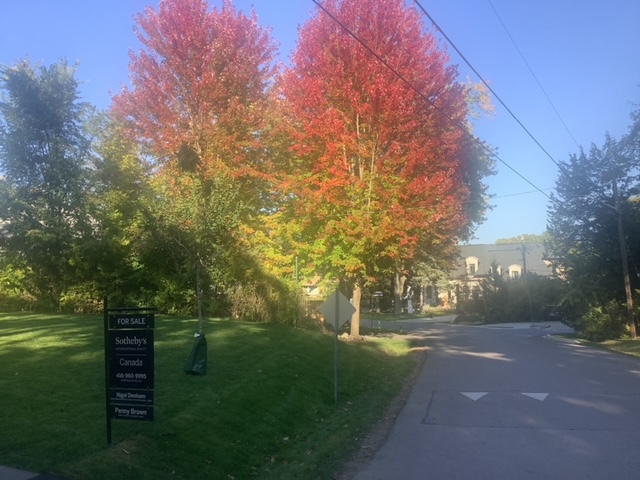
Two weeks ago things began to change. A strange car pulled into the driveway across the street and, in a few hours, a “for sale” sign appeared on the front lawn. We rushed to look it up on google and found out the price was 2.5 million! The next day I sauntered over to the Open House, trying to look like an interested buyer. Admit it, you would have done the same thing.

On my way back across the street to report to Peter, I met the owner of the unfinished house next door. He was headed on a similar mission. But he stopped to update me on his own house. He said that he was going to finish the garage in the upcoming week and then he would seed the front lawn. I was skeptical, but a few days later bull dozers and steel workers and electricians appeared. They broke up the concrete patio floor and lined the cavity down to the basement with steel beams. This was not your usual garage – it was a car elevator designed to transport expensive cars from the front of the house to the basement storage room.

Now, as I sit by the window, I find myself evaluating potential wealthy neighbours across the street, watching the construction of an elevator for classic cars next door, and wondering which of our friends we will invite to our exclusive neighbourhood.

Sue

Identity Crisis By Bus

A fun outing during the good weather is to attend a theatre production. There are lots of summer festivals around Ontario, but the 2 best-known have made themselves easily available for older folks who don’t like to drive.

Both the Shakespeare Festival in Stratford and the Shaw Festival in Niagara now have express bus service. The busses depart and arrive at convenient times and a reasonable cost. The seats are comfy, candy is passed around during the trip, and there is a bathroom at the back! You have no expensive visits to the gas station and no stressful driving on the QEW or the 401. Just sit back and enjoy the gossip from the couple behind. Oops I mean the scenery. Or the nap!

I made such a visit to Stratford in early July and met my daughter Jennifer there for an afternoon show. She lives in Orangeville so she drove there directly, and I took the bus from Union Station. We met at a local patio for lunch. We shared an appetizer, a main course, sticky toffee pudding for dessert and lots of talking in between. When the patrons began to arrive at the theatre across the street, we paid our bill and joined them.

You may have seen the show La Cage Aux Folles, which was first staged on Broadway in 1983, followed by a Robin Williams film, The Bird Cage. In this production the costumes are outstanding, partly because of the eye-catching quick changes, but also becanse the ruffles, feathers, and sequins are worn by burly men. We grow to love the modern family – 2 men, and their adult son who wants them to lie about their sexual identities. The “wife” does try, with exaggerated costuming and hilarious results. Jen and I laughed out loud on several occasions, imagining our own husbands, both burly men, flirting and prancing in these sexy feminine outfits.

Encouraged by my positive comments, Peter agreed to join me the next time, on a trip to the Shaw Festival in Niagara. This was a slightly different trip because it was the day of the big rain storm in Toronto. The torrential downpour began as soon as we had boarded the bus. After our driver had rounded the corner at Hamilton, the rain slowed down and by the time we were in Niagara, it had stopped. We were able to enjoy lunch at the Niagara Golf Club with a view of the river, and then we walked down the main street to the theatre while eating ice cream cones.

This show, My Fair Lady, echoes the theme of La Cage Aux Folles: identity. A lower class flower girl has an opportunity to try life as part of the upper class, by changing her accent as well as her costume. Unlike the wife in La Cage, this character does a good job with her identity change, but then what? Her acting is brilliant and we began to feel great empathy for her predicament. The ending left us speculating as we went to board the bus for home.

It was good to have something to think about because the return bus had broken down. We waited for over an hour for a replacement to appear. Then the driver changed his identity into Mario Andretti in order to make up time. When we arrived at Union Station, it was flooded and there was more waiting for the GO train to take us home. When we did get home it was dark and the power was out.

Now dear readers, this is not meant to discourage you! Both shows were excellent and the bus service, under normal circumstances, is efficient and smooth. As climate change continues to take hold of the world, we need to be flexible. So, as you head out to the bus, just be sure to pack an umbrella and some reading material.

Sue

Party On…

Last summer Peter and I attended a large family reunion at another family’s home. It was so much fun that we impulsively offered to host the “second annual” reunion at our place this year. I didn’t start worrying until about May.

In June things were coming together. We figured out general seating arrangements for either sun or rain. We planned a rough outline of a menu: punch for the kids and wine or beer for the adults, Costco pre-cooked chicken shish-ke-babs that could be heated in the oven, and an ice cream buffet for dessert; finishing off with coffee or tea. We hoped that our guests would contribute salads and appetizers. It all sounded like it would work out perfectly. We started to relax.

In early July, the LCBO announced their strike plans. Peter and I assessed our supplies and tried to figure out what drink would be most popular. Before the party, the negotiators were still bargaining, so we went to the grocery store where we were able to top up on beer and wine. A crisis was averted. Surely nothing else would go wrong.

The day of the party was gorgeous – sun and a light breeze. The clouds were wispy and the humidity was low. We worked all morning sweeping the patio and setting up all the chairs and tables. We arranged serving dishes, cutlery and plates. We filled the coffee maker and the sugar bowls. We checked on toilet paper. We even had time for a quick nap. We figured we had thought of everything.

The guests began to arrive and mingle. The appetizers and salads appeared. The young kids played together with the babysitter we had hired. The older kids played soccer. The adults shared a year’s worth of gossip. All was going well.

Then the power went off.

Peter and I had an emergency meeting where we chose one lucky son, who happened to be standing beside the BBQ. He fired it up to heat the chicken, which he did in batches while he warmed up the bread on a top rack at the same time. We lined the salads up on the kitchen counter under a window, so people could see well enough to serve themselves.

Meanwhile we kept the freezer door closed tightly so the ice cream wouldn’t melt too much. As for the coffee: people were going to have to make do with wine and beer instead. Then a guest mentioned that, at the first reunion, everybody ended the evening with shooters. We quickly produced a bottle of Limoncello and some shooter glasses. The coffee was mostly forgotten. Another crisis was averted.

But there was more to come.

As we sat talking and sipping, there was a sudden loud “rrriiippp” and we looked towards the swing – where a mom and her daughter had been sitting. Where were they now? They and the mattress had fallen through a hole in the canvas seat and were sitting on the concrete patio blocks below. Several guests rushed to pull them up. We didn’t think to take a picture at the time but we saw that the victims were laughing and there was no bood anywhere in sight. So we all went back to drinking our Limoncello.

But by this time Peter and I were feeling a bit nervous. What else was in store for us? We didn’t have to wait long to find out. As we sat down again to finish the bottle and our conversation, we were joined by buzzing and blood-sucking sounds. Some unwelcome guests had decided to join the party. We had not thought of everything after all – we had forgotten the bug spray.

Sue

The swing seat waiting for repairs.

Window Washers

Every couple of years Peter and I have the same debate – should we wash the windows or hire somebody? I don’t like the work of the first option, and Peter doesn’t like the expense of the second. Besides, we don’t know anybody to call for service, as you can see below:

This spring we had the same debate but the stakes were a little higher. We are planning a large family reunion at our house, and some of the guests have never been here before. So, when an older teen came to the door to offer the services of his window-cleaning “company,” I was interested. I asked for a pamphlet or a business card and he hesitated, checking his pockets. “Uh, I ran out of them. Sorry.” I told him to bring one back and drop it in our mail box. And that was the last I saw of him.

Peter and I put off the task as long as we could, but finally we began to gather our equipment. It took some hunting to track down the spray nozzle for the hose and the brush with the extendable handle. These tools mean that Peter doesn’t have to use the extension ladder and I don’t have to sit on the bottom step, steadying the ladder while holding my cell phone ready to call 911.

Relieved of this duty, I began to set up for my job; cleaning the inside of the windows. Peter had borrowed my spray bottle of Windex, so I searched for another one in the cleaning supplies cupboard. I found it and a roll of paper towels, and began on the first window. Soon my window was covered with beige spray and tiny granules. On closer inspection, I discovered the reason. This was not Windex – it was plant fertilizer! I reached down for the paper towel roll, but I knocked it off the couch, where it unrolled through the living room, across the dining room, and into the sun room. Things were not going well.

After rolling up the paper towels and finding a bottle of real Windex, I carried on, climbing on and off chairs, spraying and wiping windows, and beginning to dream of my afternoon nap. I stopped for a rest and went to check on Peter. He was not doing much better. His hose nozzle was leaking and he was soaking wet. And the last window he had worked on had a screen instead of a window, so now the outside of the inside window was dripping with dirty water, and there was no way to get at it.

At this point we figured we had done almost half of the windows and we deserved a break. We finished the job in bits and pieces, doing a few windows at a time. It was rewarding when they were all clean and shiny. The smears on the sun room door, made by Venus drooling over the neighbour’s cat, are gone. The birds eating at the bird feeder are now visible from where we eat at the dining room table. And our guests will be able to see our front garden in full bloom as they sit on the bathroom toilet. Mission accomplished.

As for next year? We can no longer deny that we are slowing down. A retired columnist, writing about Joe Biden and aging in the weekend Toronto Star, summed it up when she said it was time for him to take off his “running shoes.” And for us, maybe it’s time to put away the Windex.

Sue

Driving With Mercedes

Peter and I have been driving for over 60 years. So when our daughter asked us to be part of a driving study, for which we would be paid, we thought: “Piece of cake!”

We learned further details of the study. It collected data about how people, seniors in particular, would react to driving fully automated cars. My current car, Ruby, has a lot of automated safety features such as back-up warning, lane change warning, and front-end warning. Although I have not been brave enough to try out the front-end one, the other 2 work just fine. Peter, on the other hand, dislikes driving my car because he says it beeps at him all the time.

We signed up for the study’s 2 sessions. The first one began with a lot of questions about our driving habits. Then we had a chance to try out the driving simulator. We had actually seen this “car” on a UHN tour I wrote about previously (Kite, March 12, 2024), and we were anxious to step inside. I was impressed. It was a Mercedes with comfy seats, leather steering wheel, seat belts, even a large-screen TV! The study assistant sat in the passenger seat and pointed out a couple of other features: an indictor for engaging the automation mode, “but don’t worry about that right now” she said. And a barf bag, “just in case.” In case of what?

Mercedes

Pretty soon I was told to put the car in Drive and follow the green van ahead. The engine came to life and I tried to steady the car in my lane. But the steering was very sensitive and the car quickly swerved too far to the right and then too far to the left. I suddenly knew what the barf bag was for. Then I got too close to the van and had to put on the brakes. But they were not sensitive at all and I was slowing down to a stop, as the van disappeared into the future. I had to step on the gas pedal so I could catch up.

Next we headed towards the higway and the van sped up – to 120. I never drive at 120. But the study assistant said that if I didn’t catch up to the van, the data would be lost! Quickly I develped a lead foot and we caught up. I focused intently, not wanting to steer off the road and embarrass myself in a pretend car. Finally I saw a sign above us that said “Thank you.” The try-out was over. The assistant reminded Peter and me of our appointment for the real test, in 7 days.

For the real test, the car began in automated mode. I had to sit there, with my hands in my lap and my foot off the pedals, as Mercedes took over. One time she oversteered a turn and I quickly grabbed the steering wheel. That was a no-no. Reluctantly, I put my hands back in my lap.Then suddenly there were loud beeps and the large-screen TV became a warning sign: YOU ARE DRIVING! This time, when I grabbed the wheel, I had control again. “Too bad, Mercedes, I am the boss now!”

The test went on for a while with Mercedes and I vying for control. She went up hills; I steered around turns. She drove through a city, and I sped up on the highway. It was like a game, with the competitors taking turns controlling the ice, or the field, or the ROAD, and I was determined to win. Finally the “Thank You” sign appeared and the automated study was over.

I stepped out of Mercedes, feeling victorious. I had hit no curbs. I had caused no virtual accidents. I had not used the barf bag. Take that, Mercedes!

But mostly, Peter and I had provided some data that might be useful in the study of safe driving for seniors.

Sue

The Boating Life

One day on the long weekend, Peter and I had a choice: wash the windows or go boating? Hmmm…

I grew up with a boat. We had a summer cottage on Lake Ontario and my dad bought a boat to go along with it. It was a small runabout with a 35 horse power motor. In those days, that was fast. Until our neighbour got a 50.

My brother inherited that boat and had it for many years. My cousin bought a similar kind of boat when he had a young family. They used it mainly for water skiing. And another cousin and her husband moved up in the boating world and bought a small yacht – with enough room to travel and stay overnight. Being on the water in a boat seems to be in our family genes.

So I was sorry to learn recently that both cousins have decided it’s time to give up their boats and stay on land. They cite rising gas costs and storage issues. But it’s also probably about the loss of energy and stamina as we age. For boat trips, you have to kneel down to untie the boat from the dock, step off the dock and into the seats far below, bend over to check the gas level in the motor, wrench your neck to back out of your boat slip. You basically need Cirque du Soleil training.

In Toronto there are easier options for water travel. You can go to Harbourfront and pay for a sightseeing cruise along the shoreline. You can take a ferry over to the island and have a picnic. You can join one of the many area yacht clubs, make friends, and then ask to borrow their boat. Or you can go to the Boat Show in the winter and tour lots of fancy yachts with their gold faucets in the bathrooms and luxurious sofas in the living area.

But Peter and I have all the options beaten. We have our own kayak waiting for us in the garage.

It’s easy peasy. Peter pulls it down the street propped up on little wheels at the back. Wen we get to the river, we launch it easily on a gently sloping boat ramp. We wear life jackets – for safety and for warmth! I put on my water shoes, walk to the front of the kayak, and shimmy backwards to plop into my seat. Peter steps in from the back as he pushes us off. There is no gas, no steering wheel, no speedometer. As long as we rememer the paddles, we are good to go.

But on Canada Day we ran into an unexpected problem. The river was full of water craft: kayaks like ours, canoes, sea-dos, paddle boards, inflatable dinghies, even small yachts. There were boats parked along both shorelines and several lanes of traffic in between. Drivers kept changing lanes wthout signaling. The oncoming traffic waved their arms frantically. Other drivers suddenly backed up to look at the scenery, or did a U-Turn in the middle of the stream, or just stopped to talk to other boaters. It was confusion. It was chaos. It was a Toronto traffic jam on the Humber River!

But it was still better than washing windows.

Sue

Summer Wardrobe

Two weeks ago, when the heat wave was announced, I quickly packed up my fleece tops and lined pants, and sent them to the basement. Then I started looking through my summer outfits. To all you male readers, don’t tune out yet – I’ll be telling you about Peter’s summer clothes too!

Most of my summer wardrobe is in pretty good shape. Things still fit and none are too badly worn. I went shopping for a couple of items to supplement: a white linen top and a pair of denim capris. I went to Winners first and then, in desperation, to Sherway Gardens. There were NO linen tops, and apparently capris are out of style this year. I could only find long, wide pants. Add an umbrella and I look like Mary Poppins ready to take off. The other option is short shorts which reveal things nobody wants to see on an old lady.

So I did what all the smart young shoppers are doing these days – I went to Amazon. And there they were – capris and linen tops! I don’t really like shopping this way. I prefer to feel the material and try the clothes on. I also don’t like all the excess packaging that Amazon uses: cardboard, plastic and filler that has to be disposed of. And I don’t like seeing all my favourite department stores going bankrupt. I miss all those past shopping experiences with friends when I used to get such great advice. For example: “Oh for heaven’s sake, that looks Terrible on you!” And then we’d go for lunch together.

Peter’s view of clothes, no matter what the season, is very environmentally friendly, (not such a bad idea in this age of conspicuous consumption). If the clothes fit and just have small stains or rips that can only be seen up close, then they are good to go. He used to have two categories: everyday and dress-up. Nowadays, with his love of gardening, the dress-up clothes sometimes bypass the everyday category and go directly to a new one – farmer.

As for accessories, purse sales have changed too. Female executives are buying large bags but the contents are different; make-up and baby toys have been replaced by a laptop and a pair of stiletto heels. Other women are forsaking any kind of purse. They download all their credit cards, driver’s licence and health card onto their phone and stuff it into a pocket. Voila – hands free! On the other hand, there are more men using purses. They buy a fanny pack with a long strap and sling it over their shoulder, or they buy a regular purse and call it a “man bag.” This is Role Reversal at its most obvious.

When it comes to shoes, there is only one choice this season: Slip-Ins. These shoes were Made for older folks like us. No more bending down and tying laces. Just slip into these shoes from a standing position. They are SO comfortable that I wanted to buy out the entire store. But I settled for one pair in a very affable grey. No matter where I go, I meet myself. Everyone is wearing them: on the subway, at the ball game, on walking trails, in the mall, even at fancy restaurants.

All of Peter’s poker buddies wear slip-ins. I have been thinking of buying him a pair too. His dress-up shoes are well past their “best-before” date, his everyday runners are looking tired, and his farmer shoes are, well, farmer shoes. I mentioned my purchase plan to Peter. To my surprise he replied that he already has several pairs of slip-ins. He said he made them himself. When he saw my look of disbelief, he produced two pairs for me to see. Here they are:

Dear readers, you can make your own slip-ins too!

Happy Summer.

Sue

Baby Point

When Peter and I first explored the neighbourhood of our new city home, we were surprised to discover an area called Baby Point. Aside from imagining little crying bodies in diapers, we were stumped. What was this area? Last Sunday we went on a Heritage Toronto tour and found out.

The area above the east banks of the Humber River north of Bloor Street West was first explored by the Seneca tribe as they navigated the Carrying Place trail. The trail led the Indigenous and their furs from northern Ontraio into the waters of the great lake. A big part of the trip was on the Humber River. This river was called lots of other names, including “Leave the Canoe and Go Back” river. The route was treacherous indeed.

In the 1670’s, according to archaeological finds, a village sprang up, likely the result of tired Seneca voyagers leaving their canoes behind and climbing the banks of the river. They built longhouses and settled down. Their village was safe due to the vantage point, and there was lots of food below. Salmon swam down the river in the spring and back up to spawn in the fall. The Seneca tribe named their village Teiaiagon which means “crossing the river.” The village stood until 1805 when the British bought the land from the Mississaugas Of the Credit as part of the Toronto Purchase.

A few years later the British gave 1500 acres of the land to James Baby (pronounced Babby) in a pretty sweet real estate deal. Baby was a member of parliament as a result of his influence in the Family Compact. He called his new estate Baby Point. He and his descendants lived there for almost 100 years. Eventually the home was demolished and the land sold. There are 2 reminders of that era: Baby’s reputation as a slave owner, and a black oak tree believed to be about 200 years old.

The 200-year-old black oak tree stands behind this more recent house

Robert Home Smith bought the land in the early 1900’s and began to develop it into a new concept – a subdivision! He envisioned a neighbourhood of elegance: winding streets surrounded by stately trees, single detached homes, made of stone or brick, set back from the streets. The entrance to this neighbourhood was marked by gates, still standing at the corner of Baby Point Road and Jane Street. Smith also dedicated 100 acres of the land along the river to be developed as a public park. And he began building what is now known as the Old Mill Hotel and Restaurant.

Baby Point Gates

Some of the edicts of the Home Smith subdivision have become bylaws and the area is still filled with mature trees and winding streets. The community is grounded at the centre by a social athletic club for residents. The only question about the future of this lovely community is the name: Baby Point. Just like Egerton Ryerson and Henry Dundas, James Baby’s history (as a slave owner) is following him. It may not be long before the name Baby Point is eradicated. Home Smith Point might be a good replacement.

Sue

The Home Smith Estate still standing on Jane St.