Higher Education

Last week Peter and I decided we owed it to readers to report on the cherry blossoms. High Park was too crowded so we headed east to the John Robarts library at U of T. Unfortunately we were a bit late.

Friday was a beautiful sunny day. We hopped on the GO train and then the subway north to St. George station, all for one price, return, of $1.97 (for seniors). We sauntered along, enjoying the company of students, listening to their playful banter and philosophic debates. There is something invigorating about spending time in the presence of “youngsters.”

We took time to admire the halls of learning, old juxtaposed with new. Peter proudly pointed out all the buildings where his daughter, Andrea, had studied, eaten and slept when she attended as a student. We saw buildings devoted to faculties we hadn’t even heard of in our university days. In the 1960’s there were 3 faculties: Arts and Science, Engineering, and Medicine. On our Friday visit we came across the Faculty of Cellular and Biomolecular Research, the Magnetic and Meteorological Observatory, the Faculty of Information aka iSchool.

Eventually we found ourselves at the Robarts Library, built in 1973 in the brutalist architectural style, which means there are a lot of triangles in the design. The library has been nick-named The Turkey by students. You can see the similarity if you look at its triangular beak and the wings spread out to the sides.

Tucked in behind the library is a walkway lined with cherry trees. As you’ll notice, the blossoms on Friday were turning from soft pink to a kind of over-done shade of brown. But there were still a lot of visitors, one dressed for the occasion, her beautiful kimonno somewhat overshadowed by the food truck in the background.

Learning at U of T is not new to us. When we moved to Toronto, Peter and I enrolled in a Friday morning lecture series focusing on Current Events. We went with another couple and would sometimes go for coffee or lunch afterwards, so we could discuss the lecture. It was informative and energizing.

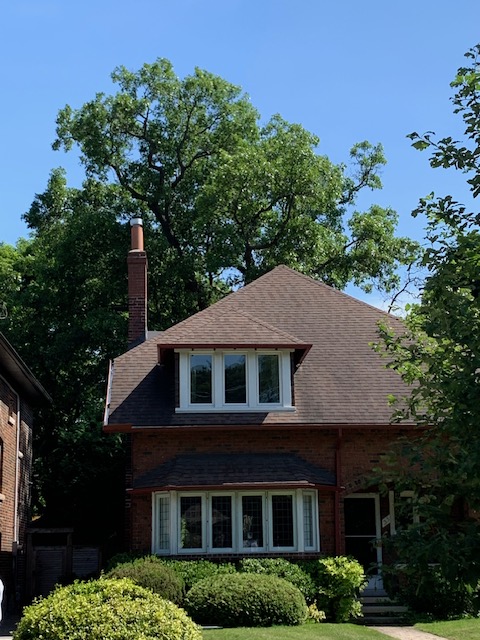
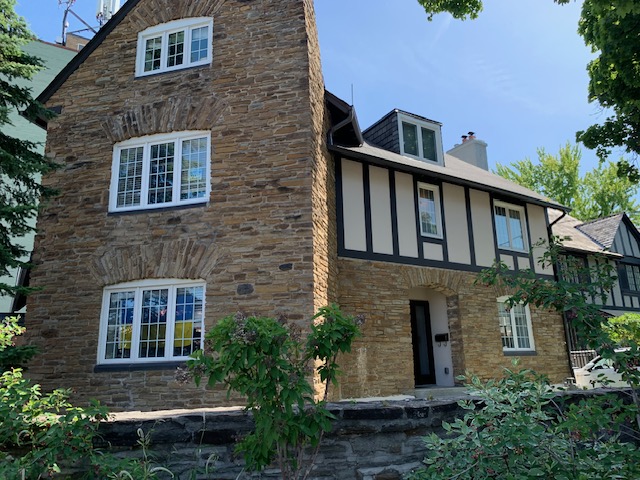
Next I took a risk and signed up for some creative writing courses. I soon discovered that students were required to read our writing Out Loud. At first we were all nervous, but after the first victim read, we relaxed. I learned a lot from listening to these other would-be writers. Then I enrolled in a course about the various architectural styles one can find on Toronto streets. There were no exams. And the instructor took us for walks to show us in person what she had been describing. I took a second course – about the architecture of small towns in Ontario, and Peter joined me on some excursions based on my notes. I only stopped taking those classes when the instructor retired.

After that I took a big leap and signed up for Italian classes. I started at the beginner level and slowly made my way to intermediate. I was a litte stressed by the pace – most of the other students had goals like moving to Italy for work, but I was only taking the classs so I wouldn’t miss any gossip when Peter’s relatives came to visit. Then the pandemic hit and we switched to classes on Zoom. This was another roadblock for me, especially when the instructor sent us worksheets hidden on an app, and then we had to import them to a split screen. This was worse than reading out loud! Mamma Mia!

But walking along St. George St. on Friday, I was reminded of all the advice we older folks are constantly hearing, about keeping our minds active, learning something new every day. So, one day soon we should all have a look at the School of Continuing Studies calendar. We could meet for coffee after our class.

Sue

Season Of Hope

Last summer our beloved Japanese Maple tree lost a limb. Then another limb began shedding leaves much too early in the fall. The remaining branches seemed noncommittal. As the first snow fell, we said good bye to the tree and waited for Spring, the season when life begins again, the season of hope.

By early April we knew the tree’s end was in signt. Peter oiled his chainsaw, and we went looking for hope elsewere. We glanced towards the flower garden near the front door. And there we found a lone tulip gazing back at us in its orange and yellow dress. It was all the more glorious becauuse it had outlived the other bulbs by somehow evading the deer who visit our street in the evenings. Then we found a second one, partially hidden by fallen leaves, but still standing.

Fuelled by anticipation, we rushed into the back garden to search. We discovered that our periwinkle border, which we had been coaxing along for a couple of years, was in full bloom, rising above other intruders. Garlic mustard had been the most invasive. At first Peter was on its side, intigued by the name. How could two of his favourite spices be bad? Surely we could cook them up into a nice little side dish of greens! But this year even this intruder was overtaken by the periwinkle.

Then we started looking for other things to eat. The rhubarb was doing well and our mouths began to water as we thought of rhubarb muffins, and rhubarb sauce over ice cream. The raspberry plants looked healthy too. But there was no sign of tomatoes, zucchini or cucumbers. So Peter rushed to the store for seeds, potting soil and tiny pots. He began planting.

Some of Peter’s babies

Peter has babied them for a couple of weeks, spraying them with water, moving them from place to place so they could follow the sun, and transporting them inside and out, depending on the temperature. Meanwhile I sit by myself, ignored and lonely. Oops… off topic.

Elsewhere in Toronto this week people are getting their fill of the season of hope. In High Park the forsythia and cherry blossoms are at their peak. Crowds of visitors find unique ways to travel there, by subway or on foot, or by playing hide and seek for parking spots on back streets.

However, as anyone knows, the quintessential sign of the season is right in your own back yard: the golden goddess, defying weedkillers and diggers, surviving in all conditions, resiliant to a fault. Presenting:

I wish you signs of hope in your life this spring.

Sue

Afternoon Tea

Often in the afternoon, Peter and I stop what we’re doing and have tea together. I boil the kettle, plop a tea bag into one mug, let it steep for a bit, and then I do the same with the used bag and the other mug. I grab 2 store-bought cookies, one each, and we sit down together for half an hour. It’s a nice break.

When our daughter and grand daughter invited me for afternoon tea as a birthday gift, I envisioned a slightly more upscale venue and maybe cups and saucers instead of mugs. Then they said we were going to the Ritz. I was taken aback – surely they didn’t mean we were going to New York City? No, they said, there was a Ritz in Toronto, just a short walk from the GO train. And we were going to High Tea. Oh my!

As the event got closer, I worried about what to wear. I have long ago given away my white gloves. Andrea suggested a fascinator might be appropriate, but luckily I realized she was joking. Finally I settled on a dressy top wiith a shawl. On the day of the adventure, it was windy, cold and wet. Not only was my outfit too Springlike, my shoes would not make it through all the puddles.

I set out in my winter coat and some black water-resistant flats I hoped nobody would notice. The GO train was on time. The Ritz was indeed ritzy and I was greeted by a doorman, then a guide who showed me to the restaurant, and then the coat-check girl who led me to the table. So far – so good!

At the table, Andrea and Agnes were choosing their tea from a box of little bottles filled with tea leaves, available for sniffing. I chose chocolate mint, Andrea decided on a distinctive oolong, and Agnes went for hot chocolate. Then we settled back into our comfy chairs and chatted until the tea came. We each got our own little pot with a strainer inside holding the tea leaves. And there were 3 small hour glasses so we could each steep our tea for just the right amount of time.

Next the waitress brought a three-tiered cake plate filled wth decadence, and 3 pairs of tiny tongs. We were advised to eat from the bottom up. We nibbled sandwiches on the lower level: chicken, smoked salmon, egg salad and cucumber, all crustless of course. Then we went up – to the scones with jam and clotted cream. Are you getting hungry yet?

The top tier of the plate was, shall I say, over the top. We munched on delicate cupcakes with elaborate icing, little layered strawberry cakes, chocolate squares with a thin layer of crunchy chocolate on the outside and chocolate mousse on the inside. And the best – passionfruit tarts. I was so entranced that I got my phone out when nobody was looking and took another photo:

That little leaf is made of whihte chocolate, and the tiny blob with the green bits is a meringue.

It was all very extravagant and lovely. But the best part was that we 3 generations of “girls” got to talk, uninterrupted by the outside world. The waitress stayed discreetly in the background, and the cute little baby at the next table did not cry at all. We caught up on family news, recent travels, (that was mostly them), various aches and pains, (that was mostly me), and plans for upcoming events. Our allotted time flew by. Then we thanked the staff and walked back through the elegant lobby and outside to our normal lives.

When I got home, there was Peter, waiting in his chair with his mug of tea and his store-bought cookie. He seemed relieved that I had been able to pull myself away from my afternoon at the Ritz.

Sue

There Goes the Sun

The sun is the most influential other-worldly orb in our lives. Without it, we would freeze to death in no time. Is it any wonder that there was so much hype about losing the sun’s rays for even a few minutes yesterday?

And there was definitely hype. Peter and I first noticed it when the schools in the path of the eclipse began talking about switching their PA day in April so that students could have yesterday off. As former administrators, we understood. Young kids would be in danger as they walked home during unexpected darkness, and they’d likely sneak unprotected peeks at the sun. Teens would search for hiding place in the bushes where they could entertain themselves with more earthly pleasures. Safer to leave all this responsibility at home.

Besides, this did not have to be a teachable moment – that work was being covered by the media. Magazines, newspapers, podcasts, tv specials, youtube, all contributed to our collective knowledge of what was about to happen. Zoomer magazie did a piece on how to photograph the eclipse: getting the best shot while saving the photographer’s eyesignt. Our university news magazine, the Queen’s Review, did an article covering the history of eclipses, which began in the first millennium BC, when the Babylonians were the first scientists to recognize that lunar eclipses follow a pattern.

The Toronto Star also had articles about where to get the best view, how to use the special glasses, what to watch for in the animal kingdom. And eye-catching front page headlines:

Like our friends, Peter and I were excited. This might be our last chance to see a total eclipse. The next one will not be visible in North America until 2044, which would put us in our late 90’s, well-past our “best-before” date. So we went all in and bought glasses from Amazon for $21.00. Then we discovered that the local library was giving them away for free. Now we even had back-ups!

Yesterday the excitement in the air was palpable. Traffic started building up on the westbound routes early. Th QEW and the 403 were jammed well before noon. When I made a quick trip to the bank on Bloor St, the pedestrians were strangely silent, eveyone looking down or up, focused on the big event ahead. In the afternoon, television stations began showing us amazing views from Mexico and then Texas and finally Arkansas where several newly-married couples were toasting this double event.

In Toronto the clouds began to gather and it felt like rain. Undaunted, we took a bottle of champagne from the fridge and went next door to be with our neighbours. Then we waited… And waited. The kids started to get fidgety. “When is the sun going to hide?”

Suddenly someone yelled “There it is!” We grabbed our viewing glasses as the darkness eerily descended. Slowly the sky revealed a tiny sliver-like fingernail of brightness. It grew wider and turned orange against the darkened background. It was beautiful. It was strangely peaceful. Then it was over.

After experiencing the eclipse, it’s easy to understand our enthusiasm for this natural phenomenon. In these uncertain times, it confirms for us that there is something bigger than we are, a powerful constant in our lives. No mattter how many wars we fight, how many earthquakes we endure, how much disease we suffer, the sun is always up there. Even when it disappears for a few moments, we know it’s coming back.

Sue

Easter

Easter is a rather convoluted holiday in the 21st century. For some it is considered the most important Christian event of the year, commemorating sacrifice and salvation. For kids it is a secular holiday where bunnies hop through the front door with thier baskets, and leave eggs behind. For many adults it is a reason to share a meal with family, and eat chocolate.

For some Christians Easter was not celebrated last weekend. I found this out as I prepared to organize kids’ Easter books on the table at my local food bank. Someone reminded me that our regular clients are largely Ukrainian and their Easter is not until later in the Spring. I quickly sorted out the books into 2 piles – one with stories about bunnies for the display, and another with egg themes which I put away until May 5th.

This year our family decided on brunch for our Easter gathering. The timing worked best for some guests recovering from jet lag after a recent trip, and for others who had to work on Monday. It also worked best for Peter and me because we like to have our nap around 4:00 pm. Brunch food is easier too: mimosas followed by pre-cooked ham from COSTCO and quiche from a bakery. Peter wanted to have pannetone, which is an Italian tradition, but we couldn’t find any and had to settle for hot cross buns. He declared them unworthy and ate chocolate instead.

After brunch we sent the kids on a trickier and longer version of an Easter egg hunt. They had to find various household items, which they then traded in for Easter eggs. They could not find our tooth paste and decided we must have very dirty teeth. The adults didn’t get off lightly – we had to play a modern version of trivial pursuit for our eggs. Did you know that the name for a large group of pandas is an “embarrassment”?

Around 4 pm, after everyone had gone home, I gave up my nap just for you, dear readers. I went for a walk around the neighbourhood to see how other celebrations were going. Compared to Hallowe’en and Christmas, the decorations were pathetic:

There were large groups of cars in lots of driveways. The name for that group is not an “embarrassment” – it’s a party! Relatives were gathering on their front lawns to re-connect. “Wow, Amy, how you’ve grown since Christmas.” “Look at Joshua catch that ball now -he’s heading for the big leagues for sure.” “Marianne, I just love your new hair colour!” And so on.

A one-sided conversation caught my attention. An eldery man arrived at a house in a taxi. He got out of the car with his suitcase and was greeted by the family dog sitting alone on the porch. He stooped down. “Oh my little poochie poo, how are you? You’re Grandad’s most favourite little cutie-pie in the whole world, yes you are! I’m so happy to see you, my sweetie face. Give Grandad a kissy kissy!”

He obviously didn’t realize anybody else was listening to him. And he definitely didn’t know that, in a couple of days, he would be quoted on a public blog.

Sue

Friday Catch-Up

No dear readers, this is not Tuesday; it’s a day whe I sometimes add to my blog if something important comes up.

Last Tuesday’s post, Paving Paradise, prompted a lot of positive comments from readers. Many suggested that I forward the post to newspapers such as the Toronto Star. Unfortunately, publishers usually have a caveat to any material they print: it must not have been previously published elsewhere. They want New material only.

However, one reader wrote with information about a lobby group that are working to save or re-create whatever parts of Ontario Place they can. The website includes pictures and memories, petitions to sign, letters of support to write, and, as you would expect, a place for donations.

Of special interest to me is a portal where readers can learn more about the Great Lakes and their environmental impact. I’m including the website for your information:

ontarioplaceforall.com

And thanks again for your ongoing support of my blog.

Sue

Paving Paradise

As many readers know from a previous post, Lake Ontario is very special to me. I have spent most of my life on its shores: as a child in Niagara, a teenager in Rochester, a university student in Kingston, and an adult in Toronto. Now that Peter and I live so close, we walk along the shores in all weather, we kayak there in the spring and fall, and we even try to swim there when it’s warm. So, although this is not a political blog, when Doug Ford announced he was going to pave over MY Lake, I got a little bit angry.

This man has done no end of wrong to us and our province. He created new blue licence plates that quickly faded, and then he gave us back our plate fees so he could demand more in other taxes. Before he was caught, he intended to sell part of our green belt to developers. He plans to destroy Raymond Moriyama’s beautiful Science Centre and move the contents into a tiny space somewhere else. He is trying to construct a highway that we don’t need, on valuable farmland that we do. Isn’t that enough?

Now Ford intends to pour dubiously-sourced landfill into a freshwater lake to create 25 acres of new property – so he can build a casino or spa for his wealthy buddies. Too much of our Toronto lakefront has already been stolen by condo developers and industries. Other world-class cities treat their waterfront as a gem, a place to attract visitors from around the world. Think of Halifax and Pier 21, Vancouver’s English Bay, or San Francisco’s Fisherman’s Wharf, to name a few. Travel a little farther and discover Stockholm’s harbourfront canal system, Australia’s Great Ocean Road, or Italy’s stunning Amalfi Coast:

While Toronto has lost out on much tourist business, Lake Ontario is still crucial in the fight against climate change. We need the breezes from the lake to moderate summer and winter temperatures. Fish, birds and small mammals find their homes in the lake and on the Islands. People drink the water! In anticipation of Ford’s plan to destroy Ontario Place’s West Island by paving over Brigantine Cove, absolutely NO environmental assessment has been done.

Our lake and its sisters in the Great Lakes are the envy of the world. Together they contain over 20% of the world’s fresh water. There is no bigger source of drinking water anywhere else on earth. Compared to life in drought-plagued locations like Africa or the Middle East, we live in paradise. Kind of makes you want to hum that Joni Mitchell song, doesn’t it?

Sue

Lake Ontario on March 25, 2024

St. Patrick

Did you know that St Patrick’s original name was Maewyn Succat, that he was probably born in Wales, and that he spent a lot of his youth chasing sheep? Even back in the 5th century, he could totally change his identity.

Many interesting and unusual activities take place every St Patrick’s Day. In locations all over the world, street traffic is usurped by parades, pubs are overwhelmed with people drinking green beer, the Chicago River is dyed green, and the Toronto Maple Leafs wear green shirts to play hockey. This man has influence, 16 centuries later!

Torontonians really get into the St. Patrick’s Day spirit. It got me wondering: how many Irish people actually live here? According to census data, the Irish are the 4th greatest in number, around 10 % after the Chinese, English and Canadian. The biggest concentration is in the High Park area. A lot of them, wearing green, were at the St Patrick’s Day parade on Sunday.

Peter and I were heading downtown to see a Mirvish play on Sunday afternoon anyway, so we decided to crash this annual celebration. Sure enough, the first question we were asked by a parade watcher was: “So what county in Ireland are you from?” Oops.. we couldn’t even think of a name of a county to bluff with! Then we saw Olivia Chow in the parade. If she could pretend to be Irish, so could we.

As we walked north along Yonge St, we saw lots of marching bands, rugby players, bicyclists hoisting balloons, a tiny boat from Niagara called Misty, a Batman car, a Chinese dragon, and even this contraption with no name:

The kids were having the best time. Several performers were children or teens. Small spectators were dressed up from head to toe as they sat on the curb and waved.

Some intriguing inclusions were bands, dancers, and floats from Scotland, which struck us as rare. When did these 2 countries, Scotland and Ireland, become such buddies? When had the United Kingdom become so united?

We looked around and realized that the parade also included cultural artifacts from Asia. There were marchers from workers’ unions across Ontario. And there were cheering crowds from all over the world. This was our multicultural city in action. On St. Patrick’s Day, we were ALL Irish.

Top o’ the mornin’ to ya!

Sue

Learning About KITE

No, this is not more “stuff” about Spring. This post is about a very different kind of experience we had last week. We tried to think of it as inspiring.

Peter and I joined a retired teachers’ group to visit a research hospital. It looks like a regular hospital on the outside: tall, boring brick, many many windows, and that antiseptic smell as we walk along the sterile corridors. But downstairs in the basement a whole new world exits, a world where innovation and technology create possibility. The KITE Institute.

We enter the first lab, a modern condo simulation, with additions. A robot companion greets us to ask how she can help. Monitors watch over us from the ceiling, ready to call for assistance if we fall. The bathroom has a toilet that tips forward to help us get up. The bed has grab bars which light up at night, on either side. One chair in the dining area is wired to collect health data: heart rate, blood pressure, and so on. We are constantly being watched. Could this possibly be a good thing?

Another lab is totally dedicated to falling. Volunteers are strapped into a harness as they stand on a floor which begins to tip and roll. A monitor checks for heart rate and involuntary movement as the “victim” tries to stay upright and balanced. Peter did this test once a couple of years ago, but he had played football in his youth and was trained in the art of not falling – feet spread apart, knees slightly bent, arms out. The research technician told him he was cheating!

As we age, the fear of falling is often with us. Another lab is used to study one paticular fall; the kind you have when you try to get out of the bathtub. Once again volunteers, wearing their harnesses, step from the bathtub to a platform, unaided by grab bars. The wired platform measures pressure and collects data about movement. Innovative products, like step-in tubs, are already on the market, based on this research.

The next lab is one you may have seen on CBC Marketplace, where testing of boot tread was the topic. The lab floor is a sheet of ice and the victims, once again strapped into a harness, test out various boot and shoe treads. The best treads are ones that have tiny bits of glass embedded into the sole. They sparkle in the sun and keep you upright on the ice.

The most interesting lab to me was the driver simulation lab. A full-sized car sits on a platform which can create unsafe driving conditions: speed, ice, obstacles, night driving, swerving, even fog. Not only can this lab evaluate driver performance, it can also help improve vehicle and road design.

This area of the hospital is called the KITE Institute (acronym for Knowledge, Innovation, Talent, Everywhere). The scientists are “dedicated to improving the lives of people living with the effects of disability, illness and aging.” The data collected is used to help with developing new devices and products. The institute also works to change public opinion and government policies.

One topic that grabbed my attention was based on the driver simulation lab. KITE has approached the provincial goverment with the idea of downgrading licences for seniors. Seniors with vision problems would downgrade to a driving licene that prohibits night time driving. When older folks begin having cognitive problems, their licence would prohibit highway driving, or permit local roads only. These accommodations would allow seniors to drive to the grocery store, the bank, medical appointments, and maybe bridge games at the local seniors’ centre. This way they (or we?) could stay in their homes and be more independent for longer.

Looking at these products and policy developments, and realizing that one day we may actually need some of them, was a little disheartening at first. On the other hand, isn’t it good to know that scientists are already engaged in trying to help us out?

Sue

Looking For Spring…

Even though it’s only early March, Mother Nature has been teasing us for quite a while, with signs of Spring. Peter and I went for a walk to the lake recently to take some photographs.

Along the streets, bushes are beginning to bud:

One hedge holds a bagel captive, maybe a make-shift squirrel feeder:

We passed a garden centre with an inviting sign:

One woman was industriously washing her car:

A few people, dressed warmly, walked along Humber Bridge:

One brave couple, covered in blankets, had a picnic in their inflatable boat:

When we got to the lake, the CN Tower was hidden in fog, but this swan came over to meet us:

The most enthusiastic critter looking for Spring was this racoon. The closer we got, the deeper he went:

Hope he finds it soon!

Sue