Have you ever in your life seen people so eager, so anxious, so desperate – to get a needle?
Think back to last spring when the news was so depressing, and the scientists were so doubtful that a vaccine for Covid 19 could be created in less than a year. And then it would take another several months to set up vaccine centres and distribute the drugs. When the first vaccine was finally available, we learned that it needed freezers with capacties of minus 25 degrees and the drug was only good for 2 weeks before it would expire. The task of vaccinating 35 million people seemed overwhelming.
Finally, in the beginning of the new year, the news was more positive. Then March came around and those over 80 were able to book appointments. Peter began to salivate because he is now 75 and would be in the second group. Finally he got an appointment – for March 27. But poor me, I am only 74. For the first time ever, I wanted to be older! I had to wait an extra week to get my first shot.
For our second shot we were more optimistic. We knew the ropes. Since the age group this time was 70-80, we were able to book our appointments together. And the options were greater – not only mass clinics, but also pharmacies and pop-up clinics. We looked over our options and decided to book at the same mass-vaccination clinic where we had gone in March.
I woke up early on the booking day, got my coffee, and settled down in front of the computer to wait until exactly 8:00 a.m. when the booking site would open. I set the page up, answering all the questions about health card number, symptoms, postal code etc. I waited, my finger poised over the “book an appointment” button. At exactly 8:00 I pushed the button.
The screen message read: “Thank you for booking a vaccine appointment. You are number 11,652 in line.” WHAT? How could this be? How could 11,651 other people have been ahead of me at exactly 8:00? I started to bite my finger nails. At 8:04 I got on the site and every appointment for the next 2 weeks was taken. I finally found 2 appointments for June 20. We would have to stay safe for 2 extra weeks.
But then we kept hearing that friends had found other options: one couple got a jab on the very same day at a pop-up clinic. Another couple got an appointment at a pharmacy for the next day. Other people found other creative ways to navigate the system. We needed to expand our search field. We decided to investigate a tiny drug store, hidden in the basement of of our doctor’s building.
Success! In only a couple of days we would get to roll up our sleeves. We were ecstatic. On the big day we woke up early and waited. The drug store was only a short walk from our house but we had been warned not to arrive early. Finally it was time to go. When we arrived, the place was empty; no line-up, no more waiting. Just get our shot and done. We walked home by way of Cloud Nine.
As we wait for our immunity to build up, we sit back and wonder if it is really true. Is the Covid 19 vaccine actually showing down? And is Canada really the number one country for people with first shots? With Canada Day coming up, we have another reason to celebrate our great country.
Sue
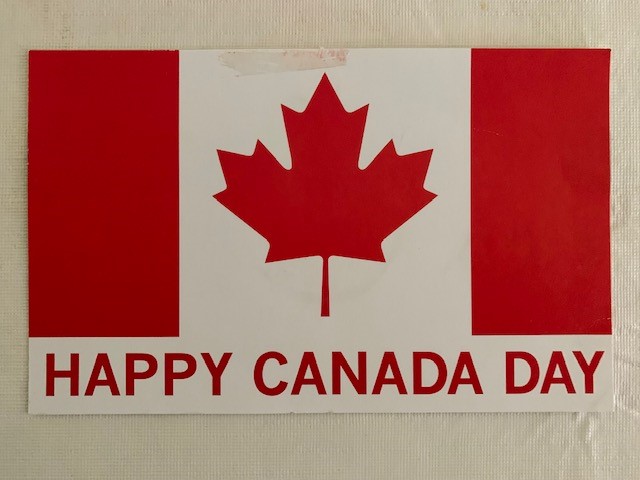
PS. I am going to celebrate Canada Day for an entire week. I will be offline next Tuesday.