Where Is Annie?

Last weekend Peter and I went looking for a cemetery. “Now why would we do that?” you ask. Was I so desperate for material?

The truth is that a friend and I belong to a book club where the author speaks to us in person, and we always feel obligated to read the book. Plus they serve cookies and tea before the meeting. The title for November caught my attention: The Knowing; A History of Canada Through the Indigenous Lens. What was a “knowing” anyway?

The author, Tanya Talaga, explains early in the book about what a “knowing” is. In a nutshell it’s a body of thoughts or facts that everyone knows to be true, but is not documented or published. I guess, for example, that all adults know that they themselves play the role of Santa at Christmas. But they would never disclose this secret because it would break the hearts of many little children.

In the Indigenous culture there is no Santa. But the people have known for years that their children were stolen from them and often died as a result of their lives in residential schools. It was a well-hidden “knowing” until 215 when remains were found on the grounds of the Kamloops residential school. The Canadian government kept it a secret because of their involvement, and the indigenous people didn’t discuss it openly because that would confirm their sad reality.

But ground-penetrating radar equipment uncovered the truth. Stories emerged of staff abusing children, sending them fishing in unsafe canoes and allowing them to drown, giving them polluted water to bathe in and even drink. School officials filled the schools to overflowing so they could collect the $4 annuity the children received. Medical care was non-existent and a lot of the students died of tuberculosis in the damp cold buildings.

As Talaga learned about this terrible truth, she wondered about her own family and began to trace her ancestors back to the 1800’s. One person eluded her: Annie, her great grandmother. Talaga discovered that Annie married twice and had 7 children, five of them “lost.” But after Annie reached the age of 60, she seemed to disappear. Was she one of the bodies buried somewhere in an unmarked grave?

Talaga’s research was meticulous and widespread. She travelled from James Bay where Annie was born in 1871 all the way to Saskatchewan where Annie lived with her second husband. Talaga visited libraries and document centres, and she searched out contacts. She read and re-read the Indian Act of 1887 and many other treaties and agreements. She even found data that had been collected by official inspectors and then discarded. All her work led her to Annie and her life until she was about 60. Then she seemed to disappear. Where had she gone?

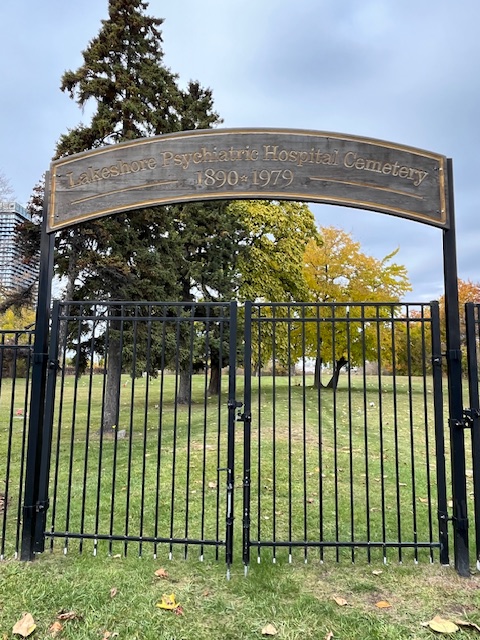
Through a contact, Talaga had a lucky break. She was able to follow Annie’s trail to the Lakeshore Lunatic Asylum in Etobicoke, where older Indigenous people without family support were placed. (The building was later re-named the Lakeshore Psychiatric Hospital). Many residents died there from disease and old age and the hospital needed a place to put their bodies. They took over some vacant land, about 3 kilometers away from prying eyes. The patients themselves cleared the land and dug the graves. Annie was buried there in 1937.

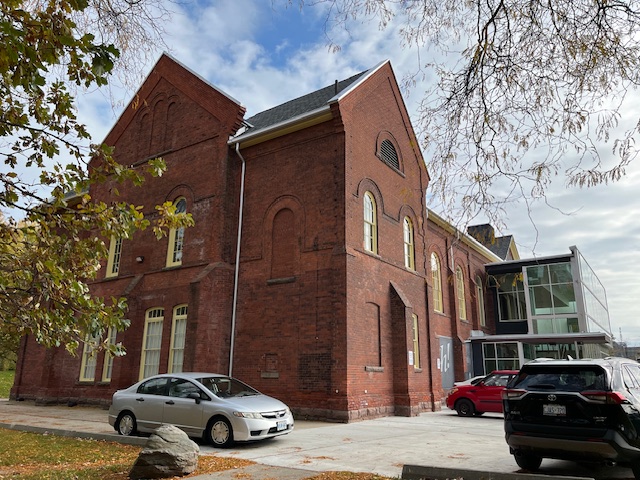
Ninety years later I found out about Annie’s grave in our neighbourhood, and coerced Peter into making a visit to find Annie again. We know the former hospital. It has been bought by Humber College and sits on the Lakeshore campus, serving as an assembly hall. Several movies have been filmed there including Richard Burton in Equus, and the Police Academy series.

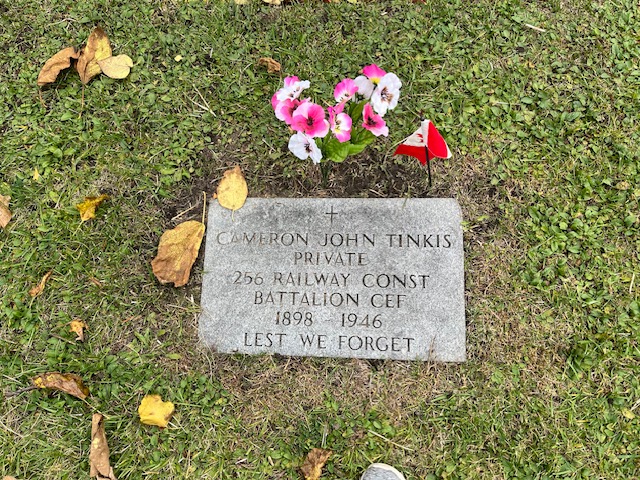
The cemetery, which is located at the corner of Evans and Horner Aves, has been resurrected by volunteers and local councillors. More than 1500 graves are now numbered so that visitors can find loved ones. On Remembrance Day it is fitting to mention that 24 of them are WWI veterans and those graves have names and Canadian flags. It’s a quiet place where Annie and others have found peace at last.

The Indigenous “knowing” is now ours too – just a few kilometers from our doorstep.

Sue

Little Italy

Peter is my unofficial agent for this blog. He makes suggestions for topics, he comes along with me on research adventures, and he reads my draft posts aloud so I can check for word duplication and syllable stress. So, when he asked me to go on a heritage walking tour of Little Italy, it was hard to say no.

While we have often wandered along Collee Street for pasta and gelato, we had never gone with a guide to learn about the history of Italian immigrants and where they chose to build their new lives in Toronto. On our tour we learned that Italians came here in 3 waves. The first one, 1870 to 1914, was created by Italians looking for jobs. The second, 1920 to 1930, occurred when the urge to explore picked up after WWI. And the largest wave saw almost 30,000 immigrants arriving on our Halifax shores from 1945 through 1970. This was Peter’s wave.

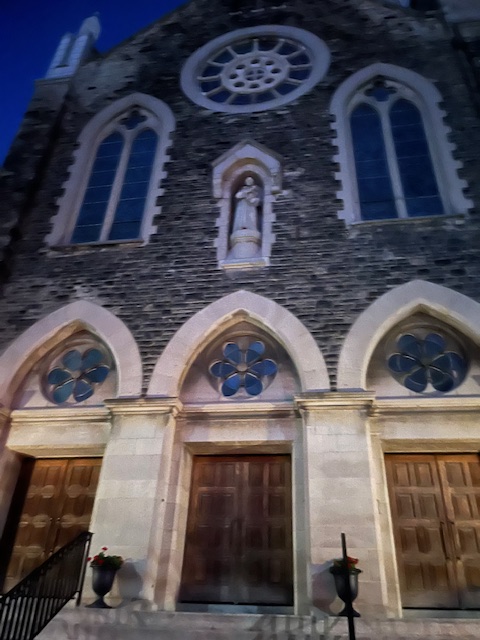
These new families tended to settle a little north-west of downtown Toronto. There they found jobs in construction and other industries, and affordable housing in flats or with one another. A community grew. Small grocery stores selling Italian bread, Brio, mortadella and squawking chickens popped up along College St. A Catholic parish, St. Francis of Assisi, was established in 1902. The parishioners soon outgrew their first church and a second, much larger one, was opened in 1913.

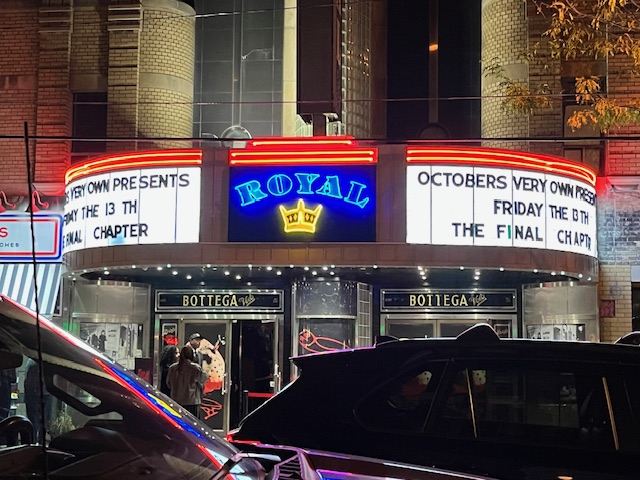
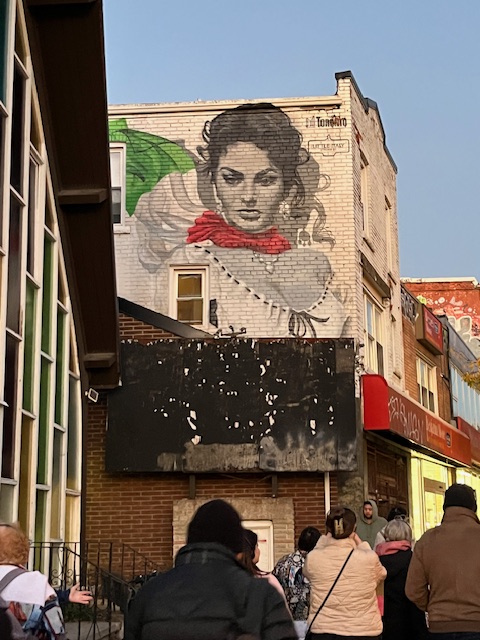
When families needed money, they had trouble accessing Canadian banks due mostly to the language barrier and occasionally to cultural slurs. So a few of the wealthier residents combined their money and created the IC Savings Bank which still has branches in the area. Then the city saw a need for language training and opened COSTI Immigrant services in 1952. This community hub provided English education, job training, and socialization. For entertainment the Royal theatre offered movies starring Sophia Loren.

By far the greatest asset to building this Italian community was the media. CHIN Radio was founded in 1966 by Johnny Lombardi. It became Ontario’s first foreign language radio station, broadcasting day and night. The shows covered news, weather, and entertainment in Italian as well as other languages, and were a godsend to Italian speakers. Johnny Lombardi was their hero.

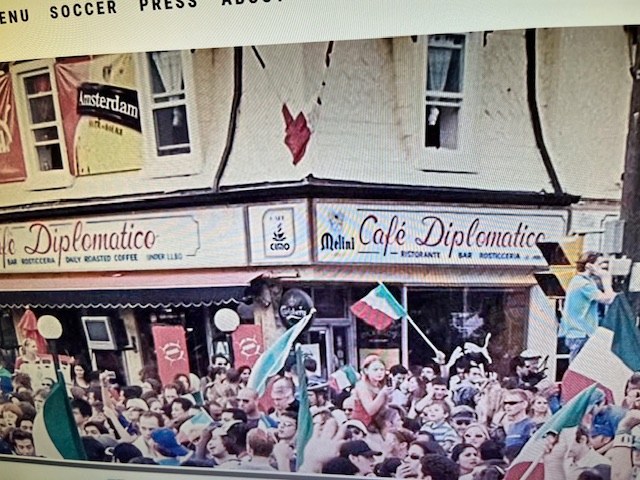
CHIN is known to many non-Italian Torontonians for its annual picnic which was first held along College St. The event moved to the Toronto Islands in 1968 and then to the exhibition grounds in order to accommodate the 125,000 annual visitors. In 2015 the picnic moved back to its roots on College Street and became part of the 3-day Little Italy annual festival.

If you decide to investigate this festival next June, you will find Peter and me eating pasta at the Cafe Diplomatico, first opened in 1968.

Ciao.

Sue

Disaster!

On Sunday Peter and I had no family visiting and I had no blog post topic so we went to see the Titanic.

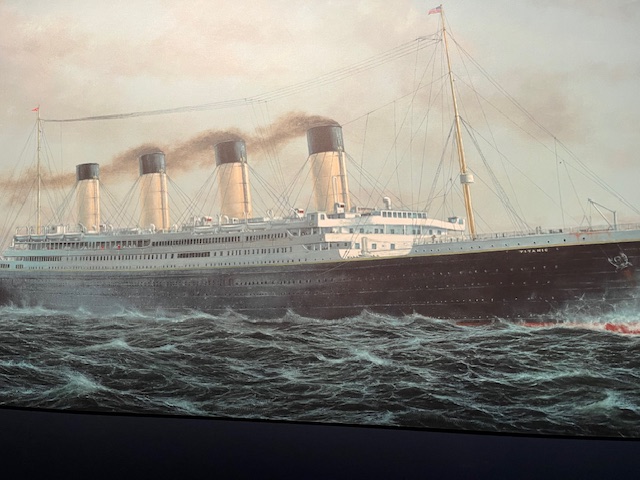
Both of us have been intrigued by this terrible disaster since 1985 when the wreck was discovered off the coast of Newfoundland. Then the bolckbuster movie starring Leonardo DiCaprio and Kate Winslet was released in 1997. And more recently, in June 2023, Ocean Gate’s TItan submersible imploded on the way to the site, killing all 5 persons aboard. Lives upon lives have been lost due to this “unsinkable ship.”

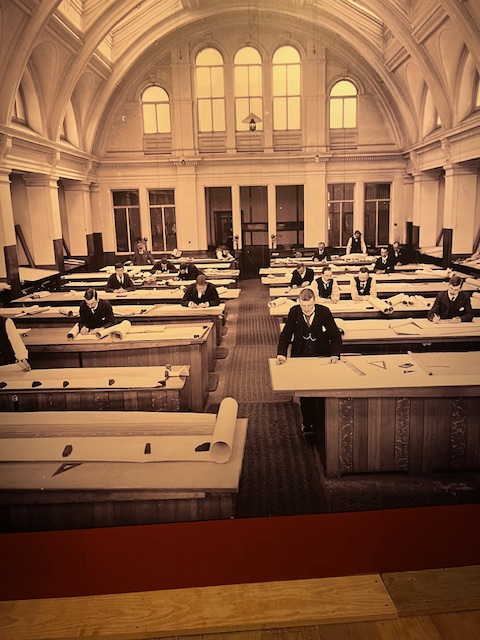
The current exhibition in Toronto walks visitors through Titanic’s history. First we are introduced to Thomas Andrews, the designer of the ship. Workers are captured in photos at their desks working with graph paper and compasses. Pictures of the shipyards of Harland and Wolff in Belfast show the hull actually talking shape The official launch date, May 31, 1911, is followed by the ship’s maiden voyage on April 10, 1012. There are black and white photos documenting the events.

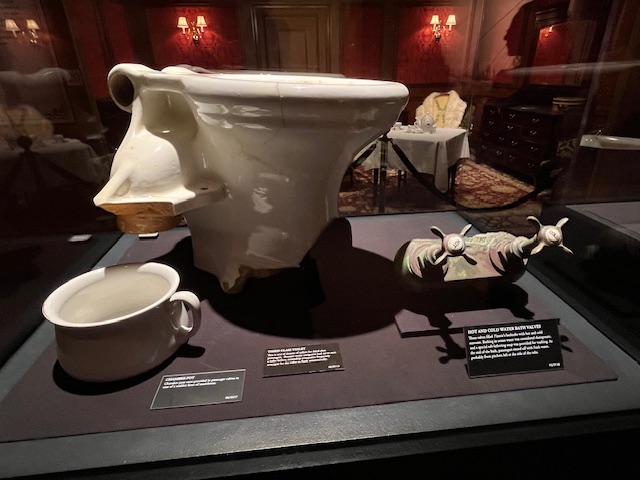
The Titanic in all its glory is recreated in parts: luxurious hallways, a first class cabin, and a replica of the grand staircase where visitors can have their pictures taken. There are many artifacts from the wreckage. We see ropes, an anchor, lights, a toilet, parts of the hull, and other pieces of hardware. Astonishingly, even dishes and some pieces of silver have survived over 100 years underwater.

A toilet and other bathroom fixtures

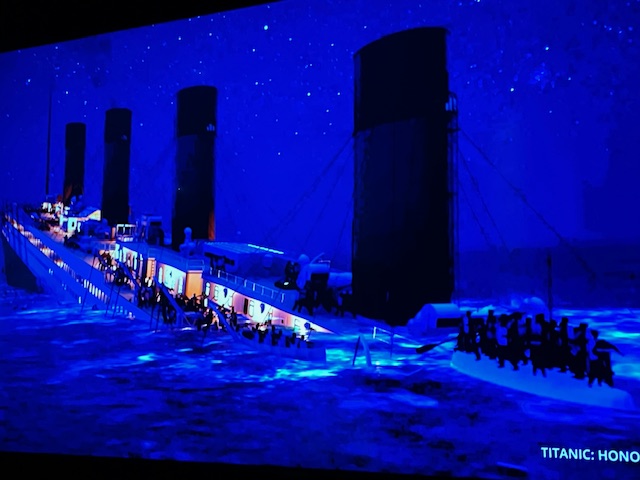
Then the exhibit moves on to show us a glimpse of that fateful night, April 14, 1912. Icebergs had not been forecast in the area. But soon one appeared out of the darkness, ahead of the ship. A video re-enactment shows how the helmsman turned the wheel sharply to the left but he could not avoid the iceberg entirely. It sliced along the right side of the ship, breaking into 6 watertight compartments. The Titanic was doomed.

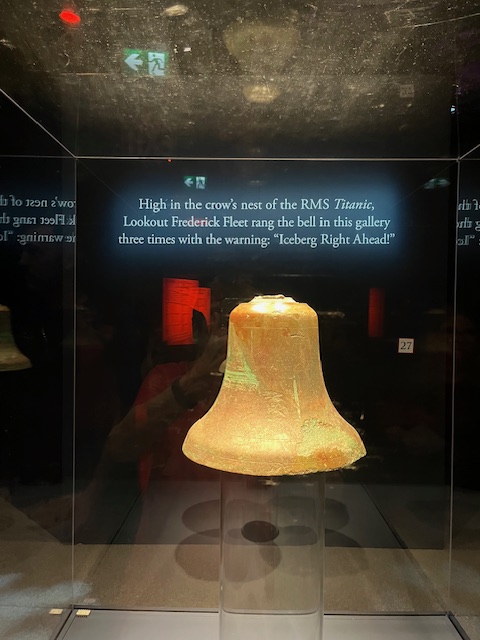
Over 1500 people died that night. Many failed to heed the warning bell and refused to climb into the lifeboats because they too believed the ship was unsinkable. Others travelling in steerage down below could not get to the lifeboats because of the crowds blocking the halls. Some managed to jump into the Atlantic, only to die of hypothermia.

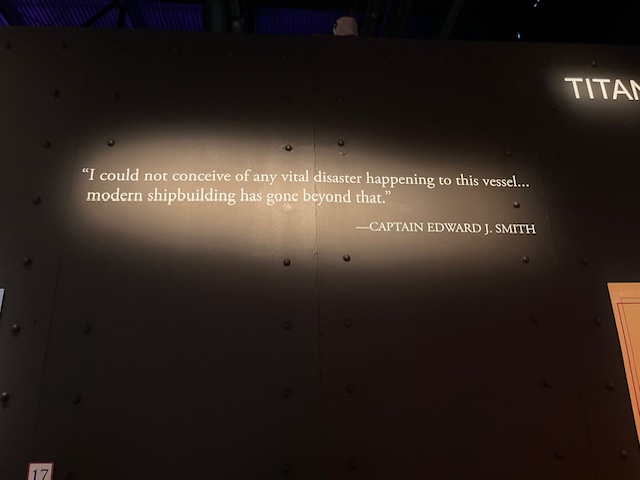
Personal stories line the walls of the exhibit. Famous business men like John Jacob Astor and Benjamin Guggenheim travelling in first class, along with immigrants from as far away as Lebanon, could not escape their fate. Captain Edward Smith, a veteran sea captain who was about to retire, was convinced by his employers at the White Star Line, to take one last voyage as captain of this luxury cruiser. It was supposed to be the honour of his life. Instead it became the coffin of his death.

Peter and I walked out of the exhibit and back into daylight, relieved that we had not been about that doomed ship. But now we had to make our way home. It was a hot day and we had travelled to Downsview Park by GO train, and then taken an Uber to the exhibition site. Going home was a different story. We decided to take the bus instead. After walking about a kilometer to the bus stop, we rode the bus to the subway. There was track work happening on our route so we had to transfer to a shuttle bus, then another subway, and finally a GO train. It took us almost 2 hours to get home.

Now, after studying the Titanic story, I am not saying that our trip was a disaster. But I will suggest that, if you want to see this incredible exhibit, you should drive.

Sue

Old Montreal

The Old Port

Being true to our “Buy Canadian” values, Peter and I chose Montreal as a short vacation destination. We were once again reminded of the ease of travel within Canada: no passports or customs hassles, no currency exchange, no health care worries, and no language problems. I even tried out my basic French occasionally and was rewarded with a smile. Or was it a smirk?

The last time either of us had visited Montreal was over 50 years ago. Peter visited expo in 1967 and I went to a conference in 1972. Would the city have changed since then? My recollections were of a hangover from too much free wine on the plane, and expensive shopping on St Catherine Street. Peter remembered sharing a room in a high-end hotel with about 4 other young guys. Several decades later, we were going with another older couple like us, and we needed a different plan.

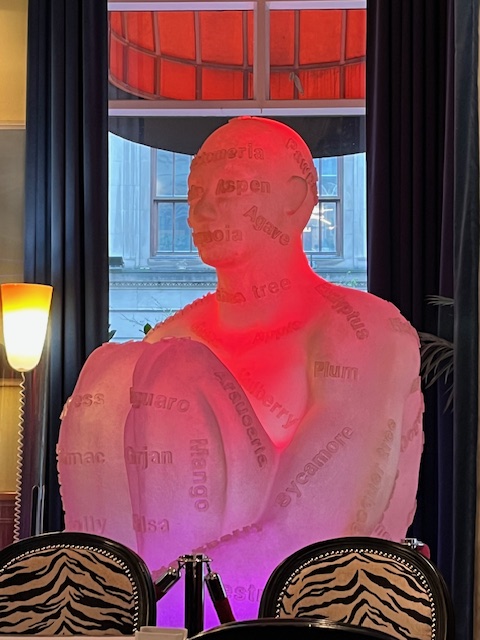
We were told to be sure to stay in Old Montreal, near the Port and the waterfront. It sounded perfect – old and quiet. We found a perfect hotel too: L’Hotel near the port, with lots of eateries, and a subway stop. The hotel itself had large comfy beds, a convenient breakfast area, and art on all the walls in case we woke up with insomnia in the night and needed to go for a stroll.

Art in the hotel lobby

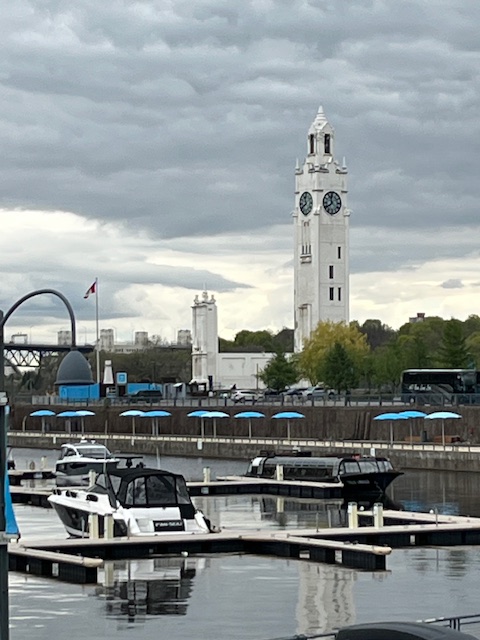
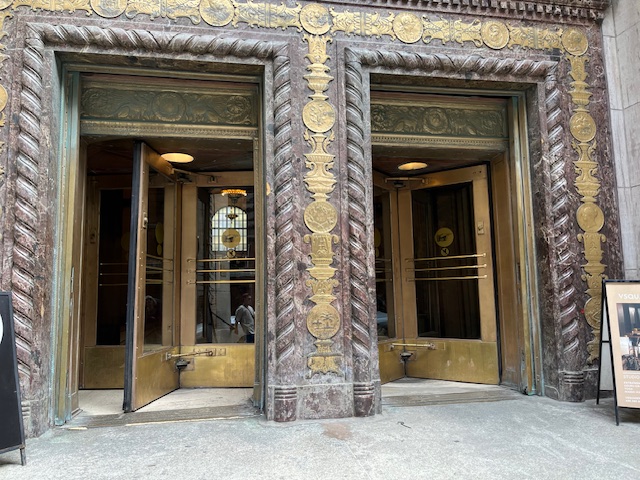
We spent the first day wandering around the waterfront and enjoying the architecture. It was a big contrast to Toronto, where old buildings have mostly been torn down and replaced with steel and glass skyscrapers. Here the buildings have been re-purposed: into restaurants, boutiques and markets. The 1864 Royal Bank, once the tallest building in the British Empire, has been transformed into office space, where the ground floor is now the Crew Collective Cafe- a place for small businesses to rent internet service and hold informal meetings.

Front doors of Royal Bank building

We limited ourselves to One church only – Mary Queen of the World 1894. We chose this one because the front piece of the altar, officially named the ciborium, was built in 1900, and is an exact copy of the ciborium in St. Peter’s Basilica in Rome where the new Catholic Pope recently held his first mass.

Pope’s altar

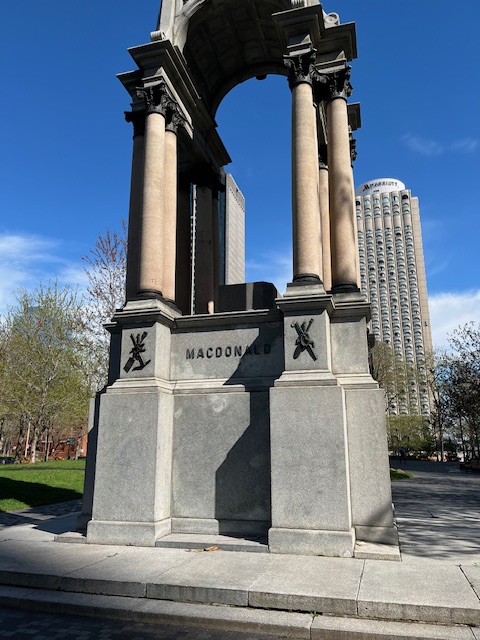
On our wanderings we ran across this monument to Sir John A Macdonald, missing John, who was first painted red, and then torn down by protesters in 2020 because of his support for residential schools. (He is now residing somewhere else). Then we wandered through Hudson’s Bay, another sad ending for an historic building. We couldn’t even find any souvenirs to buy.

Where is John?

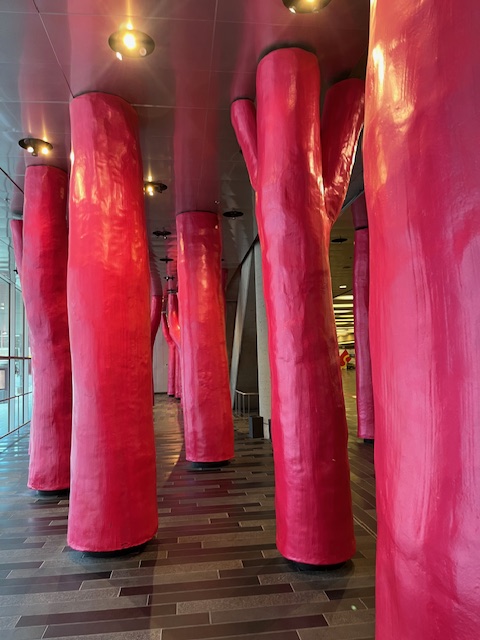
One of my reasons for wanting to visit Montreal was to see some installations by landscape architect Claude Cormier, famous for Sugar Beach, Berczy Park and Love Park, in Toronto. We saw 4 in his home town of Montreal. The grounds of the Clock tower at the Old Port are enhanced with a creation similar to our Sugar Beach. Dorchester Square has been reconfigured with bridges, benches and a fountain. The Ring separates 2 office buildings in Place Ville Marie. The most unique installation stands in the lobby of the Palais des Congress, a convention centre, where live trees and bushes are replaced by The Lipstick Forest.

We wound up each day with dinner close to our hotel. Our travels, mostly on foot, had worn us out and we didn’t want to miss our bedtime! So we chose: Brew Pub, Mexican, and Asian, with a glass of wine or a beer to start. And for those of you who are wondering about where was the French food? We did have one French lunch, all cheesy and delicious, on a patio near the port.

This, and other minor adjustments, meant that travelling for older folks is not only possible – it’s FUN!.

Sue

Valentine Stories

Did you know that Sir Isaac Brock asked his girlfriend, Sophia Shaw, to marry him only a couple of hours before he was killed at Queenston Heights during the war of 1812? Sophia never recovered from her grief and lived out the rest of her life as a spinster.

To celebrate Valentine’s Day, here’s a recap of some other stories from a book called the Toronto Book Of Love. Author Adam Bunch is a Toronto creator who has designed and presented tours, lectures, videos and writings about Toronto and its history. This book tells many local stories about love during the last several centuries. Not all of them are as sad as Isaac and Sophia’s.

The story of Toronto love begins with the Wendat tribe living on the northern shores of Lake Ontario, and their dating habits. If a young man sensed he was in love with a certain young woman, he would sneak into the longhouse where she was sleeping with her family. If the young woman was interested, she would blow out her torch and invite the young man into her bed. If she was not interested, she would leave her torch burning and the rejected lover had to leave the longhouse, his head bent in shame, while the family all watched. Feminism had begun!

In 1779 the Distillery District (then called York) was the site of violence over love. John White, a lawyer and the Attorney General of Upper Canada, got himself into considerable debt. At a New Year’s Eve party, so the story goes, his mistress snubbed his wife. White was depressed about his financial status and saw this situation as a way to divert attention to another topic. So he began to spread rumours about his mistress’s infidelity with other men. Enraged, the mistress’s husband met White for a duel and White was killed. Both the wife and the mistress lived long (happy?) lives.

Moving on in history to the 1850’s, we come across Sir Sanford Fleming’s story. He was “courting” Bessie Mitchell and couldn’t decide whether to marry her. So he suggested that they choose a date, November 2, and if the day was sunny and bright they would marry. Unfortunately November 2 was cold and rainy, so Fleming sad good bye to Bessie. A short time later he met Jeanie Hall and on one of their early dates they had an accident with their horse and buggy. It flipped over and injured Fleming badly. Jeanie stayed by his side, nursing him until he was well. Soon after that, they married. They stayed married their entire lives and had 9 children.

In World War I we find another romantic liaison. Billy Bishop, the famous flying “ace'” went on a blind date with a girl named Margaret Burdon. For Bishop it was love at first sight. Apparently Margaret felt the same way. But her parents disagreed. They were part of the famous Eaton family, and Billy Bishop, at the time a young unknown kid, was not good enough for the Eatons. Bishop spent the early wartime years perfecting his flying skills and improving his reputation until Margaret’s family relented. But their marriage was not without issues: Bishop reportedly had several affairs while flying missions in Europe.

Near the end of the Toronto Book Of Love, a story takes place in 1945. World War II was over and reporter Scott Young had returned from his duty as Communications Officer for the Royal Navy. He and his wife were visiting friends at a small house near Yonge and Mount Pleasant when a massive blizzard hit the city. It was a long way home, with no subway system yet built. So the Young’s stayed overnight on a cozy mattress in the basement. Nine months later, Young’s wife gave birth to a son named Neil. You may know his music.

The epilogue of the book is a fitting chapter on the Ongoing History of Kissing In Toronto, with a map included. Why don’t you Google “Toronto Kiss Map” on Friday and add your own favourite kiss location? Happy Valentine’s Day.

Sue

Christmas At the Castle

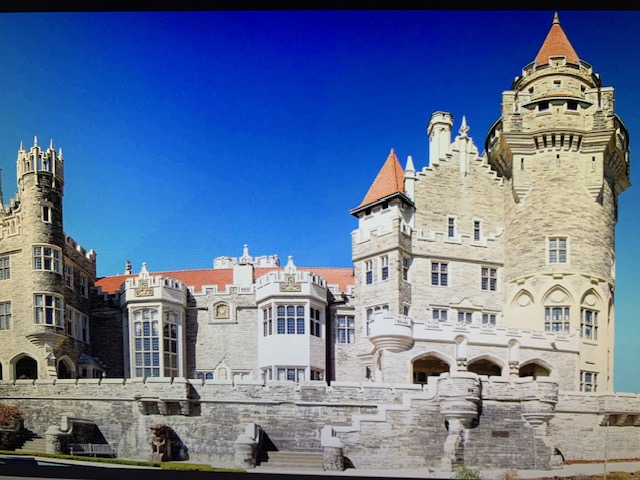
Did you know that Toronto’s Casa Loma is one of only 5 authentic castles in North America? I couldn’t think of a better place to share a Christmas outing with my 2 grand daughters than this grand old lady. But the visit was not without its challenges.

Casa Loma was built by Sir Henry Pellatt in 1914 for his wife, and it cost him 3.4 Million dollars – over 100 years ago. This is one expensive house. Its amenities include 98 rooms, many with attached bathrooms, also towers, stables and secret passageways. You may wonder where Pellatt got all that money. Well he figured out that his contemporary, Thomas Edison, was onto something with his study of electricity, and Pellatt quickly developed the idea for a hydro-electric generating station in Niagara Falls. The rest, as they say, is history.

Both Agnes and Sophie seemed intrigued by the idea of visiting the castle, poking around, and having lunch there. So we chose a Saturday. I studied the subway maps and arranged for us to meet at the Bloor Yonge station and take line 1 on the west side to Dupont Station. Then we would climb 110 steps up to the castle. Easy-Peasy. But, as the date got closer, I began to have nightmares about those steps. It would be sooo embarrassing when the girls bounded up those steps, leaving me behind struggling to breathe.

On the day of our trip, Sophie texted to say that she was sick with a bad cold and couldn’t join us. So Agnes and I carried on without her. Except we couldn’t carry on because the subway service had been cancelled on the line that we needed. We had to re-route to the Yonge subway and then take a streetcar across St. Clair Ave to Spadina. This change was fine with me – it had NO steps!

First we ate lunch in the castle cafeteria which was not quite up to castle standards. We had both worn our better clothes, that is to say, no jeans, and we were a little overdressed. The waiters wore sweat pants and elf hats. There was no linen, no silverware, and definitely no candelabra. The food was good enough but the service was slow and we had plenty of time to study the castle map. Agnes wanted to see the great hall and the library first.

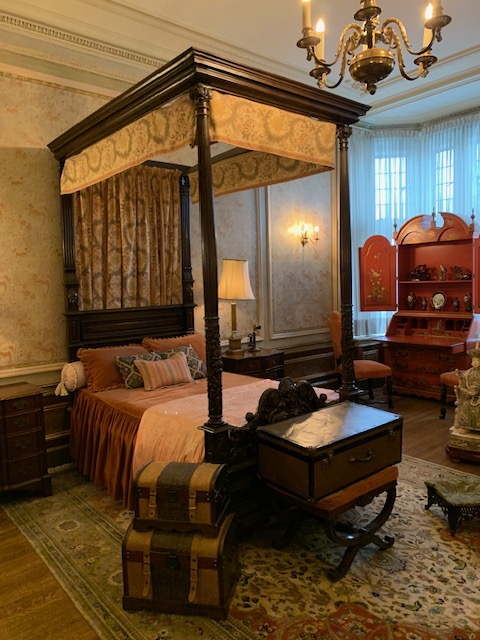
The library was closed to the public and the great hall was dwarfed by the great tree. So we made our way up the grand staircase to check out the bedrooms. We saw that they all had fireplaces, not very efficient for heating the second floor of an old stone building. We also noticed that the Pellatts and their families must have been very short to have slept in the beds. Agnes grimaced as she imagined her legs dangling from the knees down, over the footboard.

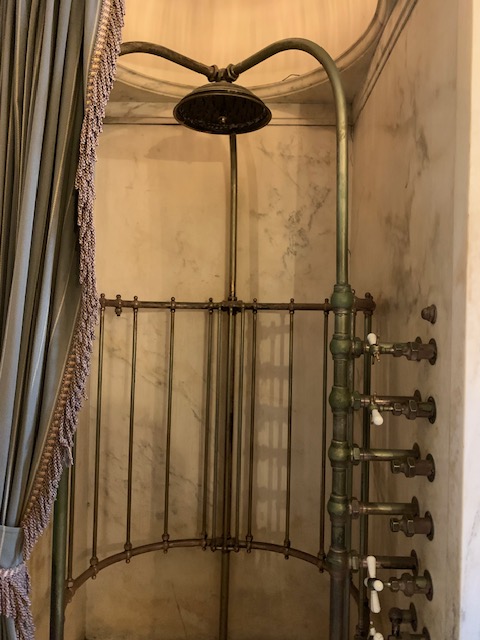
We visited Sir Henry’s bedroom and admired his shower stall – an early version of a shower one might find at a wellness spa today. But we wondered why Sir Henry’s suite was not adjoining Lady Mary’s suite? In fact, it was in an entirely different hallway. Her bathroom was quite different from his and had an early version of a French bidet. Both bedrooms had huge separate dressing rooms: Sir Henry’s for his army uniforms of the Queen’s Own Rifle Brigade. Lady Mary’s dressing room held uniforms from her time volunteering for the Girl Guides. Maybe they were too busy with their volunteer work to have any time for each other.

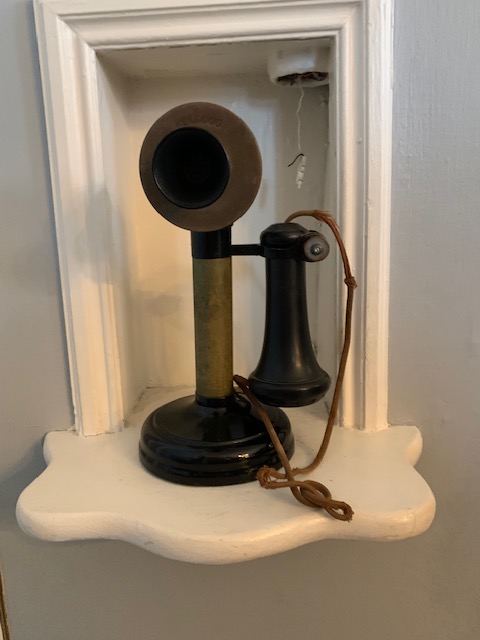
In the upstairs hallway was the 2nd floor phone. Agnes stared in disbelief and tried to imagine hanging onto the receiver apparatus while speaking into the microphone attached to the table. “How do you facetime on that thing?” she asked. On the third floor we bypassed a lot of history of the 2nd World War as Agnes made a bee-line for the tiny steel staircase leading up to the top of one of the towers. I waited for her at the bottom.

Then we decided we had had enough of castle-ing. I think Agnes wanted to get back to the 21st century because we ignored the stables and she didn’t even mention the gift shop. We climbed back on the streetcar and then said goodbye as we transferred to different subways. Agnes got home quickly and safely. I think we both felt that, while the castle might be a little outdated, our time together had been totally worthwhile.

But my adventure was not quite over. At my 3rd subway stop the conductor told us that service was interrupted for the next 5 stops, due to a security incident. Then came the words no subway rider ever wants to hear: “Shuttle busses will be running.”

As I walked along Bloor St. I couldn’t help thinking that I’d happily hitch a ride in the Pellatt’s horse and buggy if they happened to come along.

Sue