From Marshland To Playland

Last weekend Peter and I went to play in the marsh and it was fun.
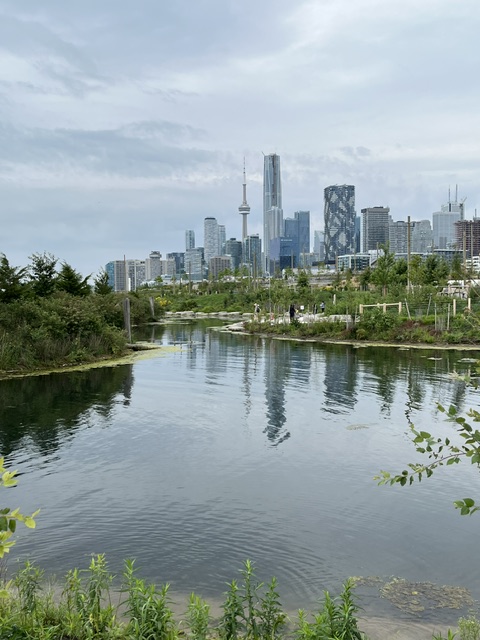
Back in 1913 the City of Toronto decided to do something about the waste space where the Don River dumped into Lake Ontario, forming a huge marsh. Over 20 million metric meters of dirt and waste were dumped into the marshland making it a useful area for docking cargo ships. The port lands increased dramatically in usage and value following the opening of the St Lawrence Seaway in 1962. In the 1960’s and 70’s the terminal included rail and truck freight as well.

This area, often called the Cherry Street Spit, has gone through many iterations. Freight delivery service gradually switched to other docks and airports. The lands themselves stood empty for several years. Joggers and bikers often took advantage of the one pathway, but at the end of the trail there was nothing but a polluted river. Until just recently! The island area is being re-naturalized and renamed Ookwemin Minising, an Indigenous name indicating a place of new growth. The only reminder of the old life is a crane which was used to load and unload cargo ships. It has been painted white and heritage-designated as a piece of construction history. It now joins the CN Tower as a landmark on the Toronto Skyline.
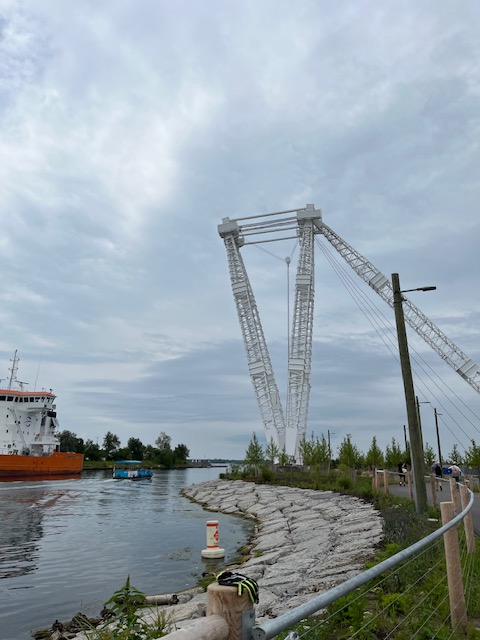
Peter and I wanted to see the new space so we took advantage of the newly created East-West Shuttle service. It carries passengers along the lakefront between Bathurst St and Ookwemin Minising with a stop in between at Yonge St. We paid $5 each to travel on a party boat with a jovial captain and comfy wicker seats. The trip took about 15 minutes.

We were glad we had worn comfortable shoes because the new parkland is massive. We explored features of the redeveloped land interweaving with streams of the old Don River. The new trails are endless, running along both sides of Cherry St. We probably saw about half of the area before our energy and time were up. Here are some of the features we encountered:

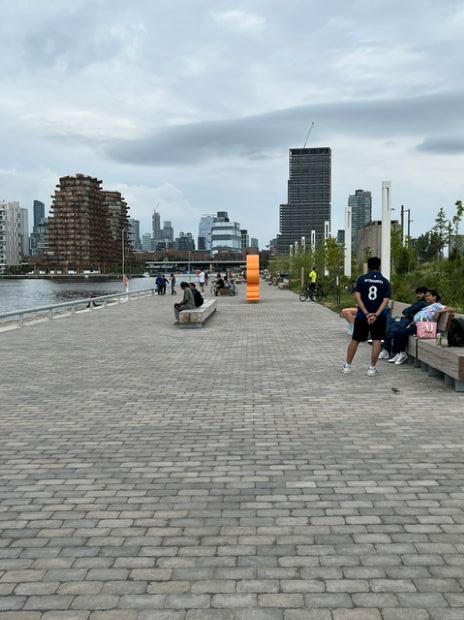
We walked along the brick boadwalk. Art installations and modern light stands now replace the cargo docks and steel rope holders.
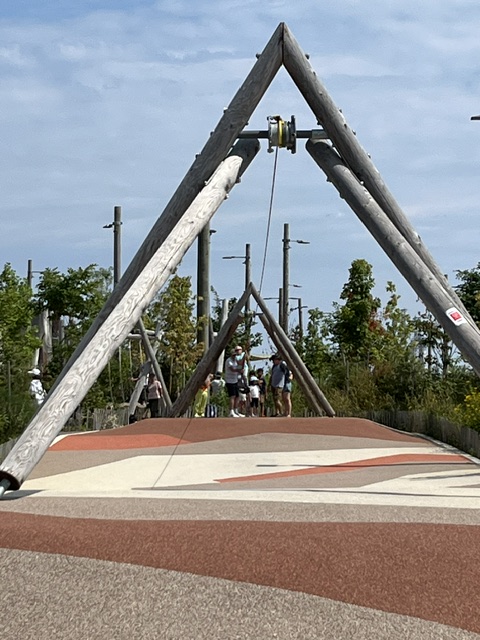
We found several play areas. We watched kids riding on the zip line:
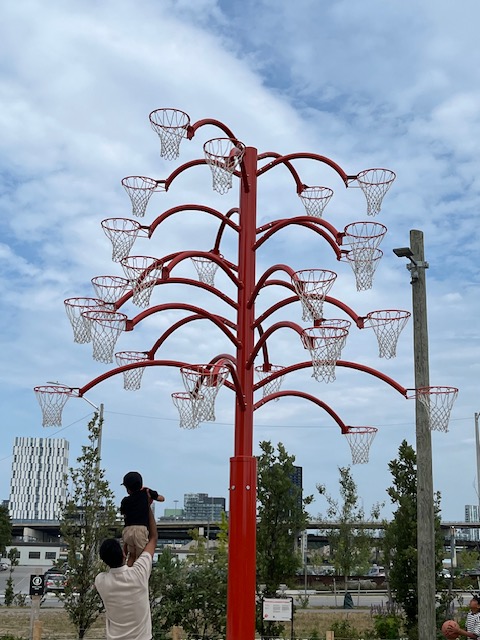
We admired would-be basketball players scoring points from far below the artistic tree of hoops:
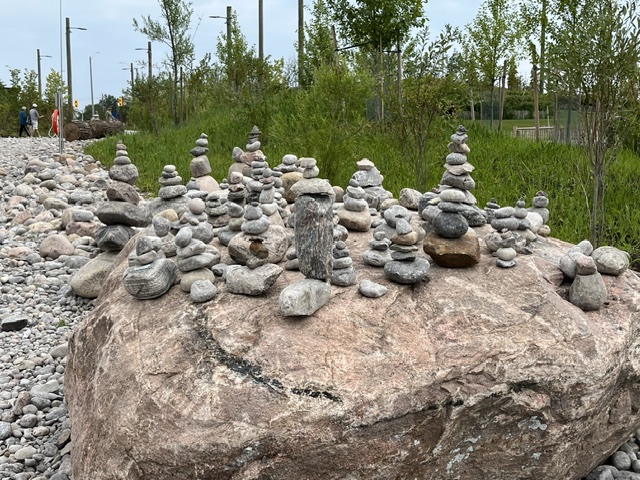
We wandered along the trails past Indigenous flags and artifacts, reminding us that we were on the lands of the Anishinaabe.
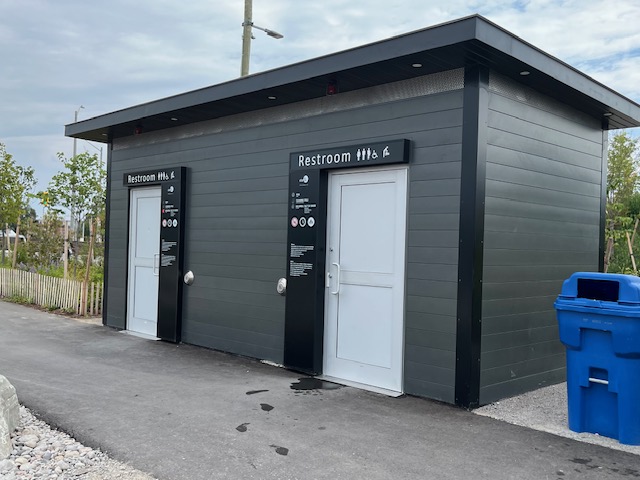
It was a lovely day. The rain hid and the sun came out. Our personal needs were taken care of with plenty of tables where we could stop to eat our picnic lunch, and modern clean rest rooms too.
It was a day full of surprises. And, when it was time to leave, the returning shuttle was on time. What more could you ask from a trip to the marsh?

Sue

PS If you go, either take the shuttle or ride your bike. This place is meat to be natural so there is no parking in the area. And there is no Tim Horton’s either, so pack a picnic lunch.
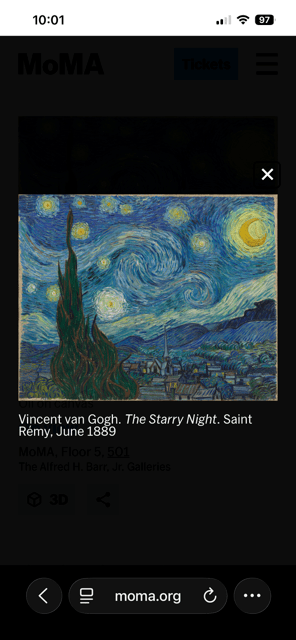
Starry Starry Night

Are you singing along to that Don McLean song about Vincent van Gogh and his struggle with mental illness which eventually led to his suicide?

Well this post is a 2026 update. It’s about another starry night, a lot closer to home. Yes, van Gogh’s 1889 painting is brilliant. It lives at the MoMA in New York City, available for all to visit. It’s described by some critics as “transforming a turbulent mental state into a timeless version of cosmic beauty.”

But, for us, seeing the real thing a few nights ago was even better.We were visiting our son’s cottage in Muskoka with other guests who live in New York City. They had done their homework about things to do while in cottage country. One of them was called the Torrance Barrens, best visited in the evening. We ate a quick dinner, packed up the cars with blankets and flashlights, and headed out into the night. It was only 8:30 but already starting to get dark.

The drive was longer than expected. The first part, on a major highway between Bracebridge and Gravenhurst, was speedy. Then there were a few two-lane roads to navigate as we looked for signs of Torrance Barrens. Finally we came to a crossroad and a tiny sign. We turned into another back road, even narrower and very curvy. It felt almost spooky, like we were going into nowhere. There were no other cars around.

Then suddenly we saw lights. Cars, 20 or more, were parked on both sides of this country road. In the middle of this stretch was an an entrance to a parking lot which was full to overflowing. We drove along farther until we found parking spaces for our group. We gathered up our belongings and followed other visitors through the parking lot and into the unknown.

The pathway went across a granite rock face with little cracks and crevices. Luckily the other guests had known to bring red light flashlights, enough for all of us to see as we made our way across the uneven surface. Soon we began to hear quiet voices. Then we came across the viewing site – a large open area, where people were sitting on chairs, lying on the ground, or even standing. Everyone was looking up. Nobody was talking.

The view above us was awesome. There was no light pollution. We easily made out the big dipper, part of the Ursa Major constellation. Then someone mentioned that there are 88 constellations in our northern sky. We began to identify shooting stars, countless tiny lights darting across the sky above. One guest had brought his phone and called up an app, one of at least 20, which tracks and names the constellations overhead.

We whispered quietly among ourselves about space travel. It was a night with no moon, and the space station was out of sight, on the other side of the world. The nearest star was light years away. Like the astronauts, we began to feel small, oh so small. And insignificant. We stayed for about an hour, admiring the magnificent view and our tiny place in it. Sorry van Gogh, but your image of space in 1889 can’t compete with what we can see for ourselves in 2026.

Then we went back to our cars. As we drove out, more cars were driving in. They had heard that the best time to view this scene was at 1:00 am. But our kids had other ideas. They were hungry and wanted to head back to civilization. The bright lights of the Golden Arches were calling.

Sue

ROM: Through the Eyes Of My Grandchildren

Last week I spent a day with a couple of my grandchildren, Agnes 14 and Ben 10, at the ROM. They had both been there before, but they wanted to go again – together. They wanted to show each other their favourite exhibits.

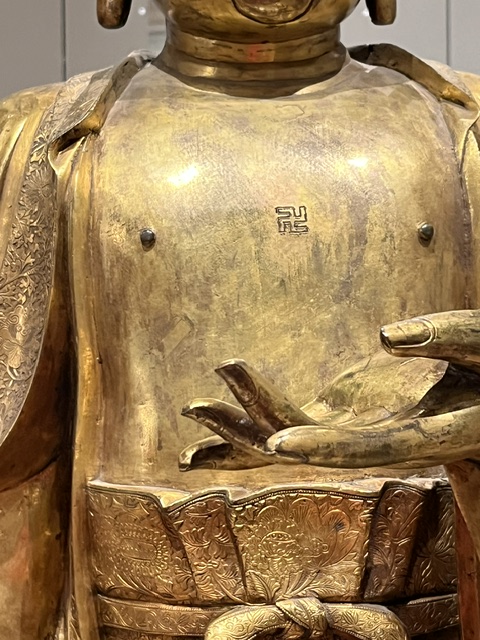
The plan was to wander through each floor, stopping when a favourite spot came along. The first exhibit that caught their attention was in China. Right away the kids noticed the swastika on an Emperor’s robe. I had thought the swastika was a marketing tool of Hitler’s, but it turns out that the symbol has been around in Chinese culture for at least 5000 years, symbolizing good fortune and prosperity. Along with all his horrifying atrocities, Hitler had been plagiarizing as well.

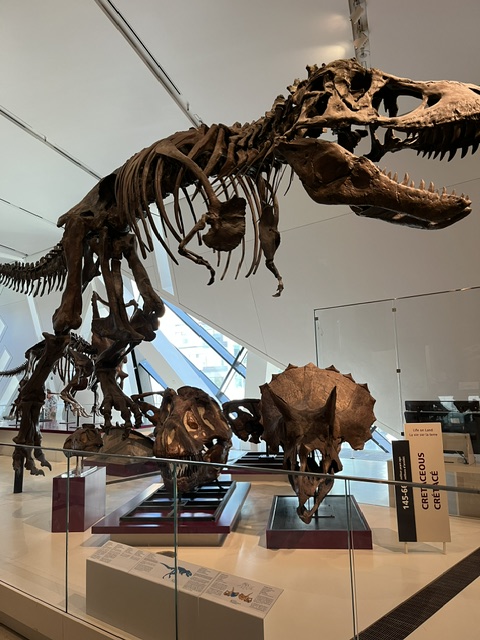
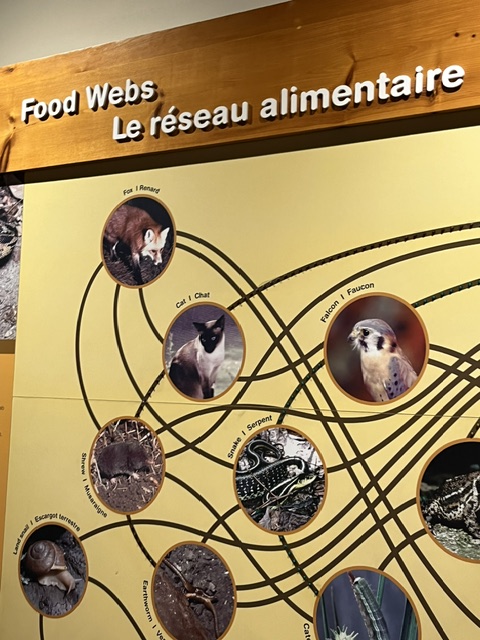
Next we visited the biodiversity section where we saw the bat cave, numerous crawling things, exotic fish, food webs, a piece of rock from the moon, and of course dinosaurs. The dinosaur exhibit was of particular interest to me because it has been moved from its original dark space near the entrance to a bright and airy new section on the second floor. Dinosaurs of all sizes can now be examined up close.

After all that, it was time for a break. The kids had never been to the restaurant; they had always come with other groups and their lunch, and sat in a different area. The restaurant is not gourmet but it serves pizza with good pepperoni (according to Ben) and a delicious salad with greens and fruit (according to me!). We were happy eating, as we made our plans for the next part of our visit.

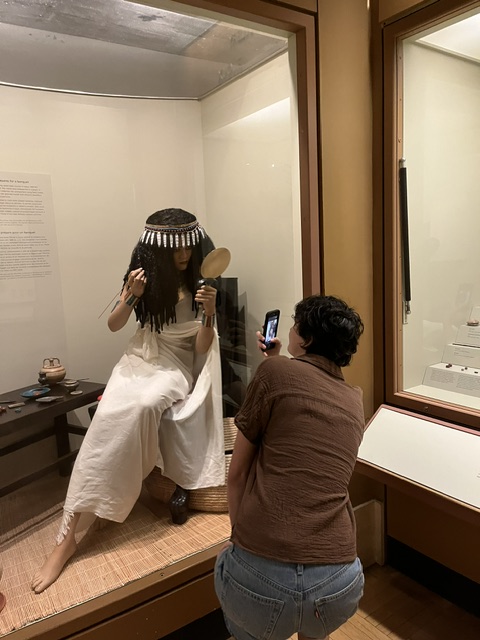
We had saved the third floor for last. This area contains Ancient Egypt which is a crowd favourite, mostly because of the mummies. But Ben and Agnes had seen them all before and walked by with only one comment: “gross.” We found 2 versions of Cleopatra – one carved in stone, and the other one a replica of Cleopatra putting on her make-up. That interested Agnes immensely.

The Japanese exhibit is also on the third floor now. At first Ben said he wasn’t interested, until I reminded him that he and his family had visited Japan only a year ago. Then he spotted the samurai swords and rushed over. He and Agnes studied the swords and the kimonos. Then they were attracted to the gift-wrapping table, Japanese style. This, like many other exhibits, was hands-on.

And that is what impressed me most about the updated ROM. Most of the exhibits have some sort of interactive display which engages young visitors fully.

Pushing buttons:

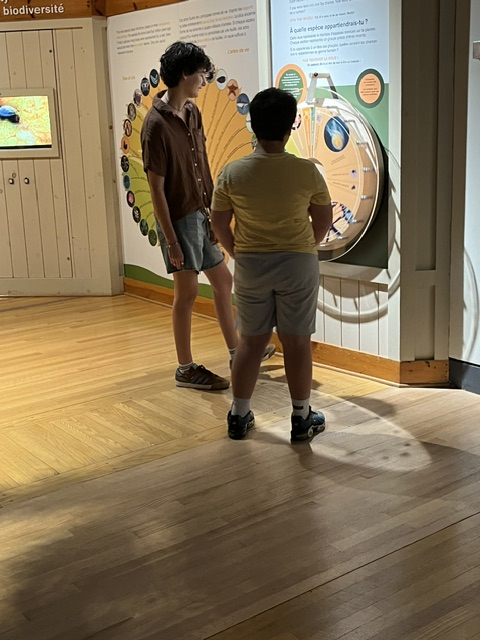
spinning wheels:

activating lights:

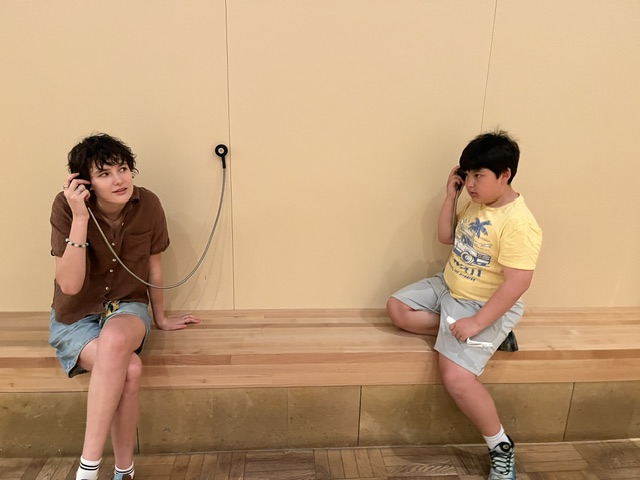
listening to mini-lectures:

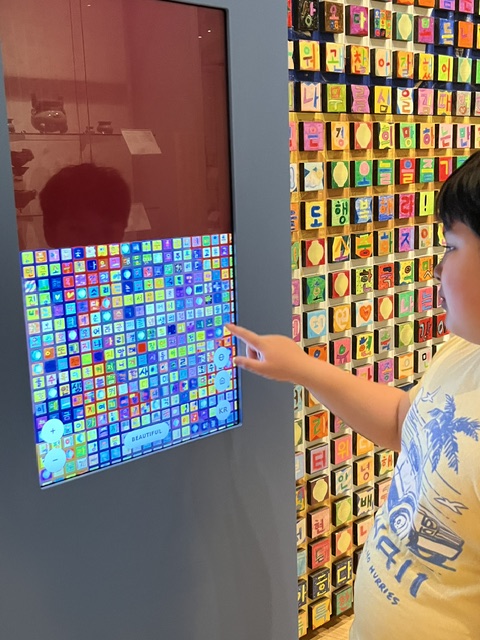
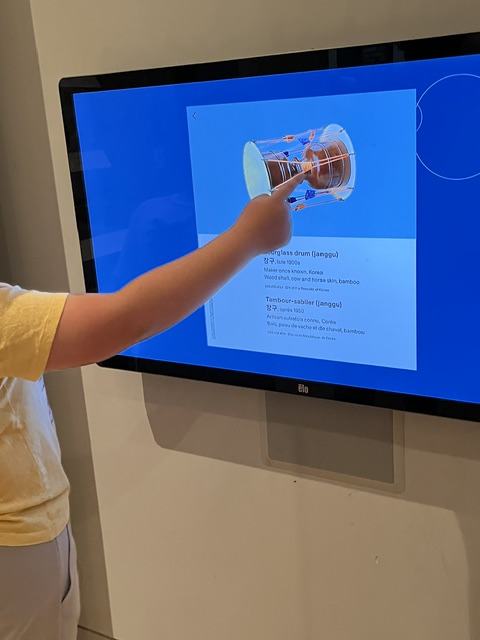
tapping on images:

Our final stop was for more food at a small cafe on the main floor. Agnes chose a dessert square, Ben found a Kermit Gingerbread Man who quickly became legless, and I got a very sugary Nanaimo bar. We left the ROM with tummies full of calories and minds full of interesting things we had learned from our ancestors. Not one of us had even thought of using our cell phones.

Sue

The Secret Gardens

As all Ontarians know, the May 24th weekend for those who don’t own cottages is the beginning of gardening season. This year the weather was perfect – warm and sunny, although the temperature forecast for the rest of the week is a little disheartening. Tomorrow night there could be low single digits!

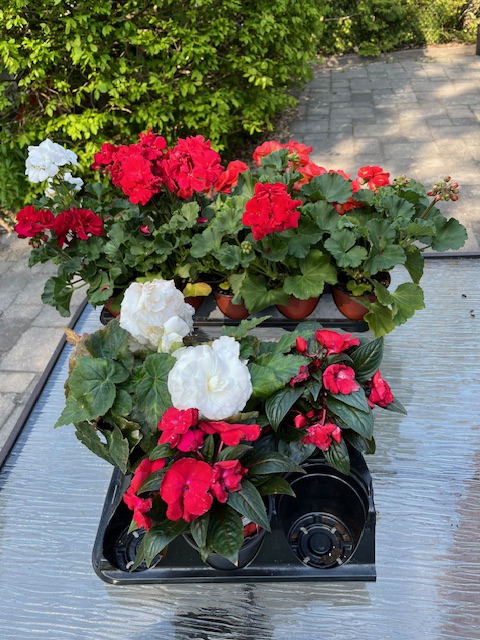
Undaunted, we rushed out to some nurseries and searched for the best prices. Then we grabbed up the freshest annuals in our favourite colours, and lugged some bags of potting soil into our trunk. I even picked up new gardening gloves to replace the ones the mice found in the garage during the long winter. Then we sat down to contemplate where to start.

This year, both Peter and I were feeling a bit hesitant to begin this gardening marathon. Peter had turned 80 during the winter and I had dealt with some health issues. Although our house in the city sits on a relatively small property, the previous owners were avid gardeners and planted a Lot of stuff! There are trees and shrubs and hedges and flower gardens all over the place. And they all grow magnificently.

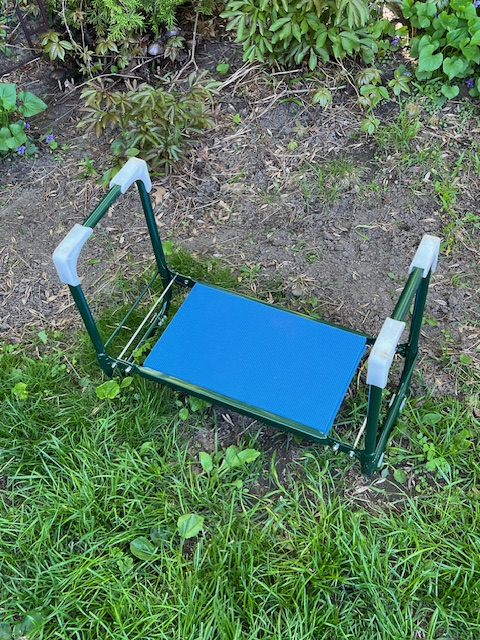
I started off the season by buying a new tool. It’s a Lee Valley invention for old people. It can be a seat or, flipped over, a kneeling pad. Both ways it is something to hold onto while standing up. I already have some good gardening tools – diggers and clippers, and they are all stored in a handy plastic bag with handles. I figured I was all set as I headed to the front yard. I always do the front first, because that’s what people see when they arrive for a visit. It’s gardening vanity.

When I arrived at the garden which runs along beside the front steps and walkway to the front door, I realized a couple of things. First of all my stool would not work on the hilly part at the beginning – it was too wobbly. Second, I remembered that last year I had been dealing with a broken shoulder during May and June and the gardening had somehow been forgotten! Where was the garden anyway? Was it that pile of dead leaves and stumps?

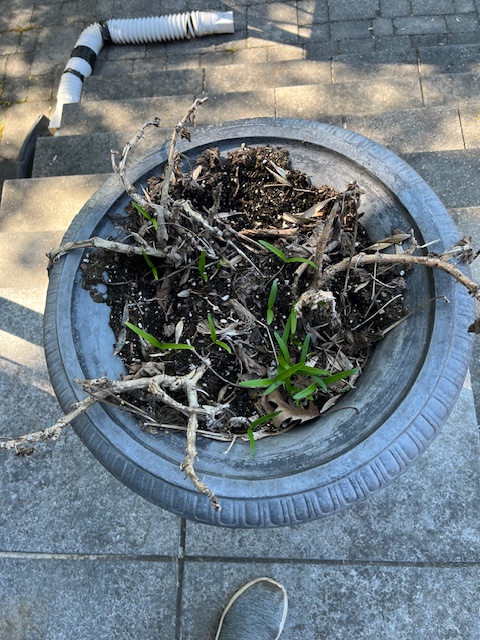
I got down on my knees an began to dig and pull, dig and pull. Soon I came across some tulip stems with their tops bitten off, the remains of some dead annuals from 2 years ago, a travelling vine from a distant ivy plant, and a pot with a plant that is as ancient as the house and has withered old arms and legs, I mean branches.

Meanwhile Peter wasn’t doing much better in the back. Some tomato seeds he had planted inside in March had grown too tall and spindly as they looked for sun. By the time he was ready to plant them outside they were toast. He was devastated. “What about all the people who count on my cherry tomatoes? They are going to be so disappointed!” So he had to stop work and go shopping for small tomato plants.

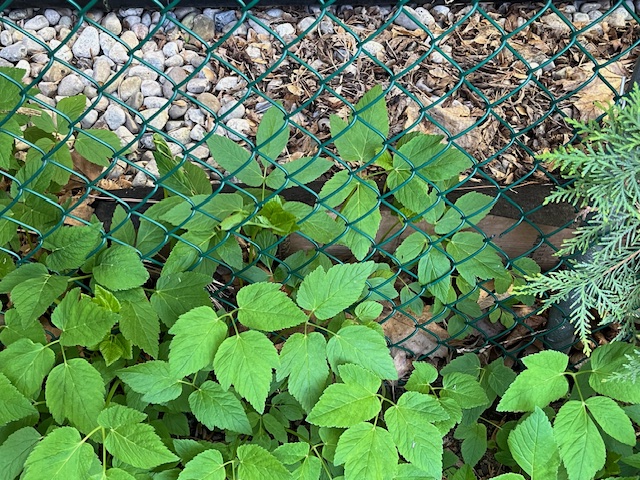
After I finished the front garden, I headed to the back and found the same neglect. The area where I used to plant bright red annuals as a border had been overtaken by the bushes behind, and some alien plant that was invading my garden right through the chain link fence! I got on my knees again and began to dig. These aliens did not want to leave! And they were accompanied by another foreign species – some kind of mushroom. Were they at least good to eat? No, dear readers, despite being quite distraught, I didn’t poison myself.

Alien species slips through the fence

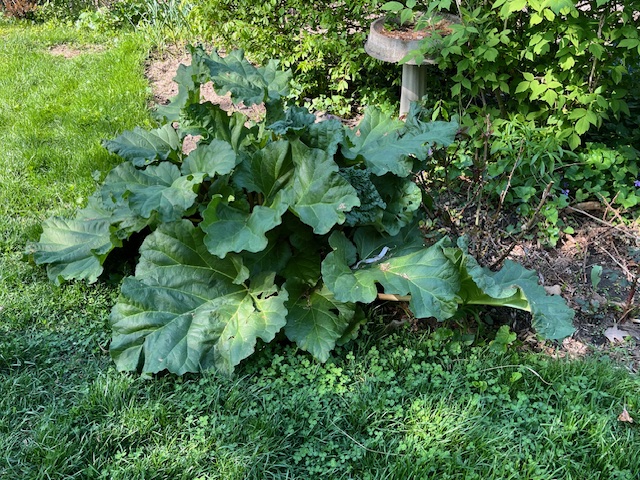
Then I moved to another area of the back yard where 2 sweet little flowering bushes I had never seen before had sprung up. And after we tidied up the side of the shed, Peter found a tall lilac tree in bloom. Despite all the work, I was really excited with the new discoveries and ready to end the day on this high note. Then Peter pointed out that the rhubarb was growing fast and really needed to be cooked.

This gardening weekend is going to last the entire summer.

Sue

A Walk In the Woods

This past weekend Donald J. Trump got the entire world involved in a war, without anybody’s permission and for no obvious reason. Iran does not have intercontinental ballistic missiles, and there is no plan for how to help the Iranian people move forward after the bombing stops. The underlying reasons could be several: his payback to Saudi Arabia for his new jet and other monetary obligations, an attempt to distract the public from the Epstein files, his hankering for the Nobel Peace Prize, or his anger with the Supreme Court over knocking down his tariff walls. Maybe it’s all of them, revealing an enfeebled old man wanting to ensure some sort of sick legacy.

To get away from the news on Sunday, Peter and I decided to take a walk we normally do in the summer. It meanders through the woods and along the Humber River. What is it like in the winter? I’ll show you:

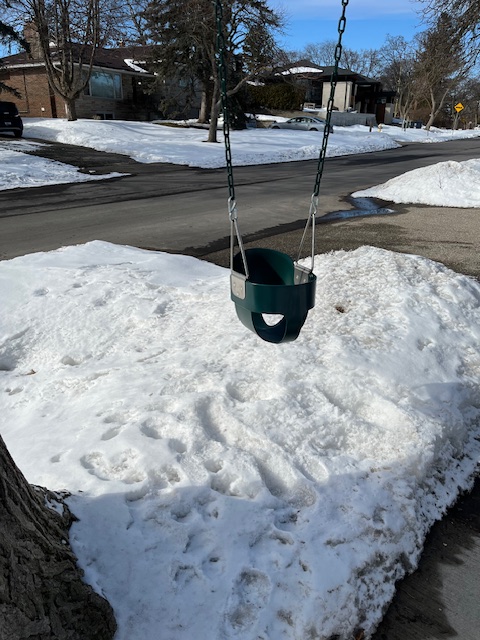
Bundled up in heavy coats, mitts, tuques, and scarves, we walked through the neighbourhood to the path in the woods. The first thing we saw was this abandoned swing. Soon a little child will be smiling and screeching as he goes higher and higher.

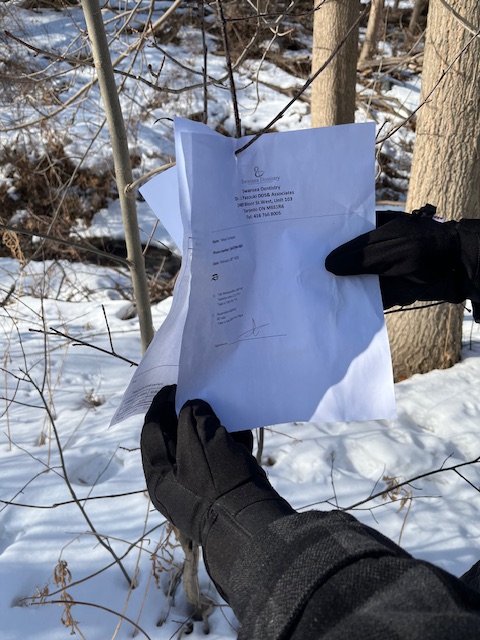
It was a little icy so we held onto each other as we made our way down to the river. Attached to one of the trees was some advertising for a dental office. It seemed to be a strange place for clients to stop and read. Could the woods be full of hidden candies?

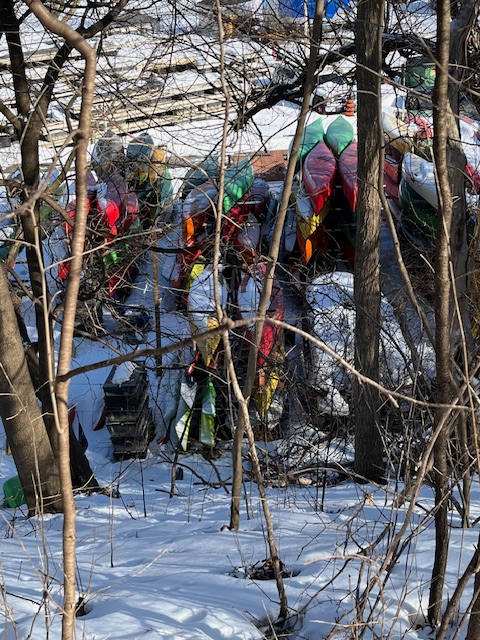
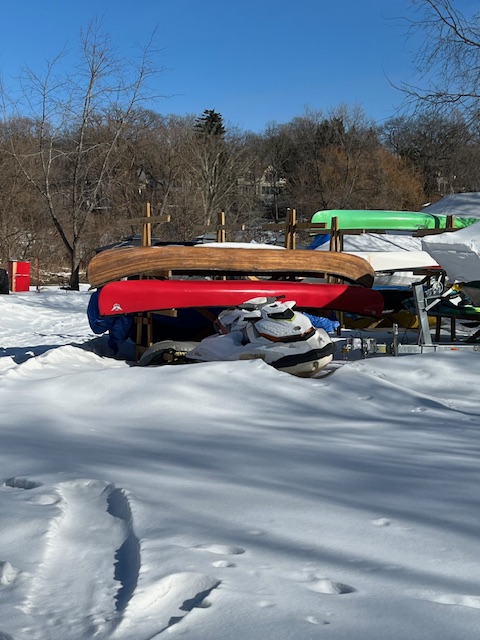
Then we walked past the Humber River Yacht Club, definitely closed for the winter:

Even the snowmobile had been deserted.

The dog park was empty too:

Peter decided to go the extra mile for you, dear readers. He stepped out onto the ice, while I held my breath, and my phone, ready to call 911:

The ice held, and the river, usually full of geese, was silent.

Then we trudged up the hill back to civilization.

We stopped to do some shopping on the way home, avoiding the inevitable CNN news feed for a little while longer.

Sue

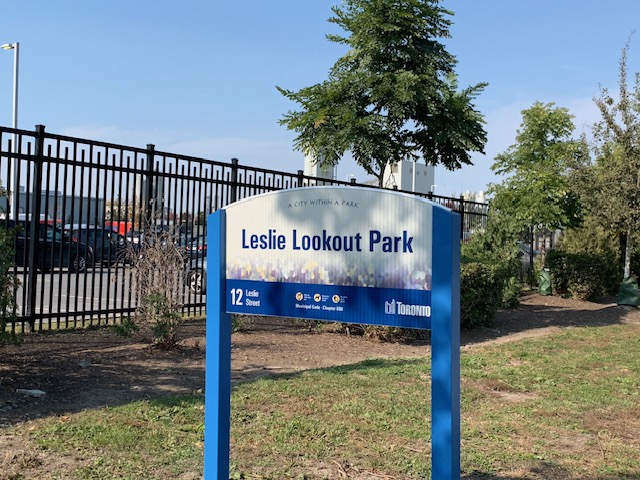
Leslie Lookout Park

I have had a crush on Claude Cormier ever since I visited Berczy Park and stumbled upon his whimsical dog fountain. What a clever idea he had: to construct parks that were more than just grass and trees; to make them a go-to destination.

Cormier died in 2023 from a rare genetic condition, at the young age of 63. What a loss for the environment and for the cities that benefitted from his genius. I was eager to visit this newest Toronto creation, Leslie Lookout Park, officially opened by Mayor Olivia Chow on September 14th of this year. The media reporting was full of praise for this park, crafted from a small piece of land near the Leslie Street Spit and the Portlands. Peter and I made our way there last Friday.

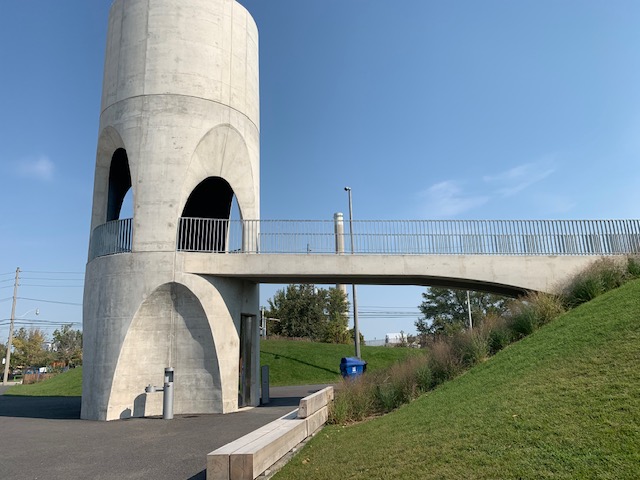
As usual, we took public transit – a subway and a bus – and then walked half a kilometer. And there, almost hidden between a huge postal station and a construction lot full of sand hills, was a tiny bit of magic. The park makes itself known through its lookout tower. No, this is not the CN Tower. But visitors can walk up the staircase to the second level and view the CN tower in the distance.

The beach, similar to Sugar Beach, (another Cormier creation), hosts about 25 Muskoka chairs looking out over Toronto’s Ship Channel. The sunsets are reported to be beautiful from this angle. The rest of the park is composed of small hills suitable for kids to roll down, and an area of porous asphalt which collects and disperses rain water. There are bike stands and water fountains. The entire park is planted with more than 5000 different kinds of greenery, including a mini-forest of bonsai.

After Peter and I had explored every inch of this clever creation, we still had some time so we wondered south the the entrance of Tommy Thompson Park. This park is a lot different from the Cormier design. It’s Vast. And Wild. Here the flowers, grasses and animals run free. In fact, there is a huge sign at the entrance, warning visitors not to bring dogs, not even on a leash. Wildlife is King.

We walked along for a while until we came to a sign indicating that the park continues for 10 kilometers. No wonder we had seen so many bike riders! A friend told us that, had we continued walking a bit farther, we would have come across public restrooms with ideal bird-nesting opportunities under the eaves. The restrooms are built according to current “green” standards, and the birds show off their flying skills there – much better for the environment than the Air Show.

Then it was time to go home. We walked back to the bus stop, past Leslie Lookout Park, grateful to have seen Claude Cormier’s final Toronto creation.

Sue

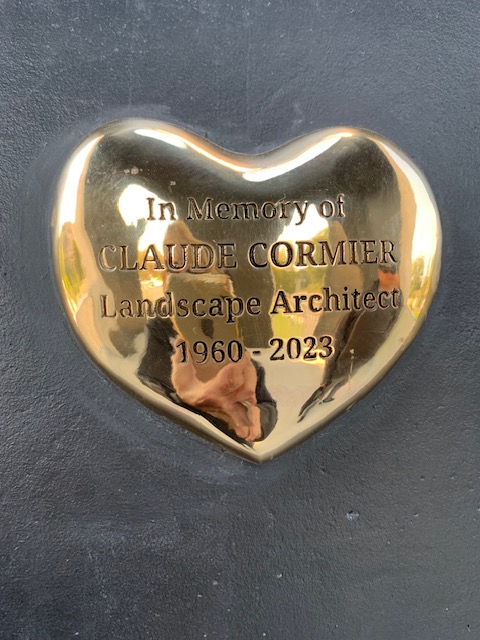
This dedication can be found on the inside of the lookout tower