No, this is not more “stuff” about Spring. This post is about a very different kind of experience we had last week. We tried to think of it as inspiring.
Peter and I joined a retired teachers’ group to visit a research hospital. It looks like a regular hospital on the outside: tall, boring brick, many many windows, and that antiseptic smell as we walk along the sterile corridors. But downstairs in the basement a whole new world exits, a world where innovation and technology create possibility. The KITE Institute.
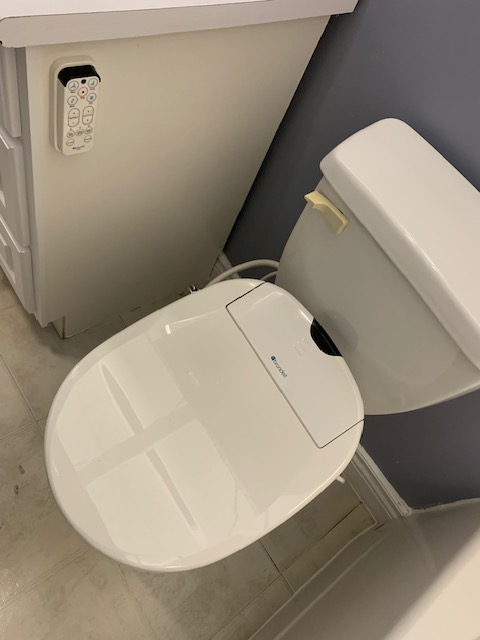
We enter the first lab, a modern condo simulation, with additions. A robot companion greets us to ask how she can help. Monitors watch over us from the ceiling, ready to call for assistance if we fall. The bathroom has a toilet that tips forward to help us get up. The bed has grab bars which light up at night, on either side. One chair in the dining area is wired to collect health data: heart rate, blood pressure, and so on. We are constantly being watched. Could this possibly be a good thing?
Another lab is totally dedicated to falling. Volunteers are strapped into a harness as they stand on a floor which begins to tip and roll. A monitor checks for heart rate and involuntary movement as the “victim” tries to stay upright and balanced. Peter did this test once a couple of years ago, but he had played football in his youth and was trained in the art of not falling – feet spread apart, knees slightly bent, arms out. The research technician told him he was cheating!
As we age, the fear of falling is often with us. Another lab is used to study one paticular fall; the kind you have when you try to get out of the bathtub. Once again volunteers, wearing their harnesses, step from the bathtub to a platform, unaided by grab bars. The wired platform measures pressure and collects data about movement. Innovative products, like step-in tubs, are already on the market, based on this research.

The next lab is one you may have seen on CBC Marketplace, where testing of boot tread was the topic. The lab floor is a sheet of ice and the victims, once again strapped into a harness, test out various boot and shoe treads. The best treads are ones that have tiny bits of glass embedded into the sole. They sparkle in the sun and keep you upright on the ice.
The most interesting lab to me was the driver simulation lab. A full-sized car sits on a platform which can create unsafe driving conditions: speed, ice, obstacles, night driving, swerving, even fog. Not only can this lab evaluate driver performance, it can also help improve vehicle and road design.

This area of the hospital is called the KITE Institute (acronym for Knowledge, Innovation, Talent, Everywhere). The scientists are “dedicated to improving the lives of people living with the effects of disability, illness and aging.” The data collected is used to help with developing new devices and products. The institute also works to change public opinion and government policies.
One topic that grabbed my attention was based on the driver simulation lab. KITE has approached the provincial goverment with the idea of downgrading licences for seniors. Seniors with vision problems would downgrade to a driving licene that prohibits night time driving. When older folks begin having cognitive problems, their licence would prohibit highway driving, or permit local roads only. These accommodations would allow seniors to drive to the grocery store, the bank, medical appointments, and maybe bridge games at the local seniors’ centre. This way they (or we?) could stay in their homes and be more independent for longer.
Looking at these products and policy developments, and realizing that one day we may actually need some of them, was a little disheartening at first. On the other hand, isn’t it good to know that scientists are already engaged in trying to help us out?
Sue

 Seventy In the City
Please note:
<
div dir=”ltr”>Please use this email: day.blair@gmail.com
<
div>
LikeLike