When Peter and I first explored the neighbourhood of our new city home, we were surprised to discover an area called Baby Point. Aside from imagining little crying bodies in diapers, we were stumped. What was this area? Last Sunday we went on a Heritage Toronto tour and found out.
The area above the east banks of the Humber River north of Bloor Street West was first explored by the Seneca tribe as they navigated the Carrying Place trail. The trail led the Indigenous and their furs from northern Ontraio into the waters of the great lake. A big part of the trip was on the Humber River. This river was called lots of other names, including “Leave the Canoe and Go Back” river. The route was treacherous indeed.
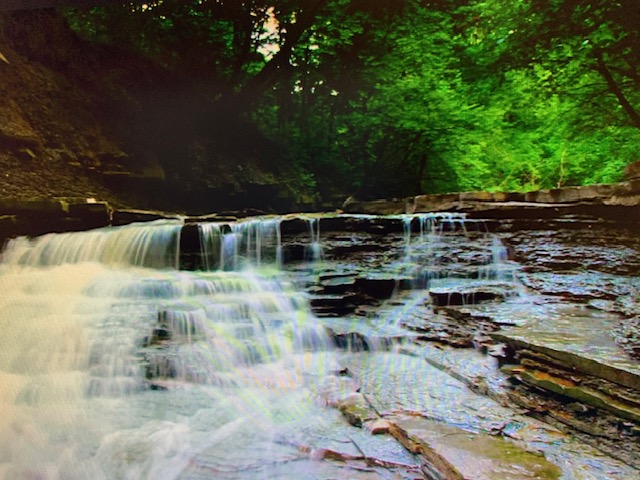
In the 1670’s, according to archaeological finds, a village sprang up, likely the result of tired Seneca voyagers leaving their canoes behind and climbing the banks of the river. They built longhouses and settled down. Their village was safe due to the vantage point, and there was lots of food below. Salmon swam down the river in the spring and back up to spawn in the fall. The Seneca tribe named their village Teiaiagon which means “crossing the river.” The village stood until 1805 when the British bought the land from the Mississaugas Of the Credit as part of the Toronto Purchase.
A few years later the British gave 1500 acres of the land to James Baby (pronounced Babby) in a pretty sweet real estate deal. Baby was a member of parliament as a result of his influence in the Family Compact. He called his new estate Baby Point. He and his descendants lived there for almost 100 years. Eventually the home was demolished and the land sold. There are 2 reminders of that era: Baby’s reputation as a slave owner, and a black oak tree believed to be about 200 years old.
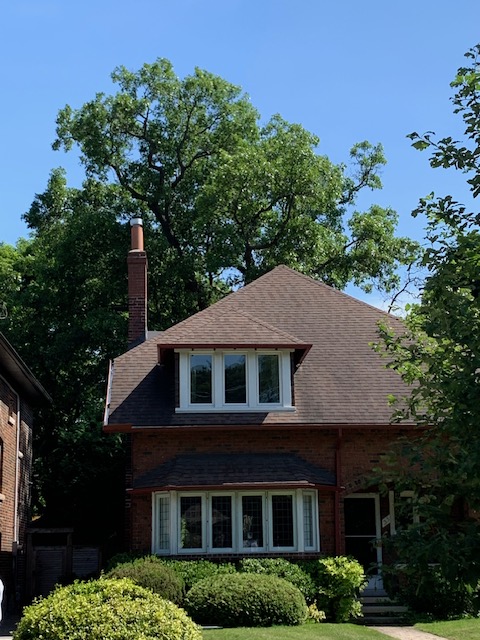
The 200-year-old black oak tree stands behind this more recent house
Robert Home Smith bought the land in the early 1900’s and began to develop it into a new concept – a subdivision! He envisioned a neighbourhood of elegance: winding streets surrounded by stately trees, single detached homes, made of stone or brick, set back from the streets. The entrance to this neighbourhood was marked by gates, still standing at the corner of Baby Point Road and Jane Street. Smith also dedicated 100 acres of the land along the river to be developed as a public park. And he began building what is now known as the Old Mill Hotel and Restaurant.

Baby Point Gates
Some of the edicts of the Home Smith subdivision have become bylaws and the area is still filled with mature trees and winding streets. The community is grounded at the centre by a social athletic club for residents. The only question about the future of this lovely community is the name: Baby Point. Just like Egerton Ryerson and Henry Dundas, James Baby’s history (as a slave owner) is following him. It may not be long before the name Baby Point is eradicated. Home Smith Point might be a good replacement.
Sue
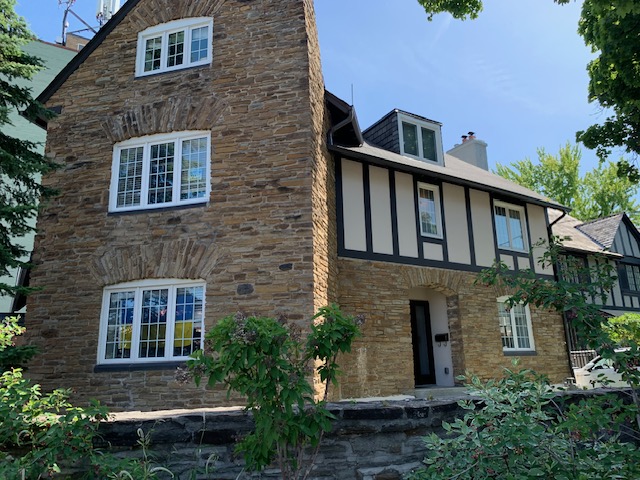
The Home Smith Estate still standing on Jane St.

 Seventy In the City
LOL This is where most of my friends lived, so I was often there. We all went to Runnymede.
It is a lovely old Toronto community (my folks and I lived at Jane & Woolner, then Jane and Weston Road…a whole different socio-economic class…and we moved almost every year). Thanks for the trip down memory lane.
LikeLike
Great piece of Toronto history.
Peter and I lived on Bloor just east of Baby Point when we first got married. A trip down memory lane.
My dad had a boss that lived on Baby Point too.
LikeLike