
When you sit down in your favourite chair to wait for a TV show to start or a guest to arrive or your wife to bring you tea, what do you think about? I can probably guess that your mind wanders backwards.
As we age, our past becomes more relevant, clearer, more interesting! So Peter and I embarked on a series of walks around Toronto this summer to review our city’s heritage. Presented by Heritage Toronto, and sponsored by the TD Bank, these walks take guests to all sort of hidden heritage gems. The walks are usually about 1-2 kilometers and last 1-2 hours. There are lots of stops along the way and one can usually find low walls or benches to sit on while the presenter is talking.
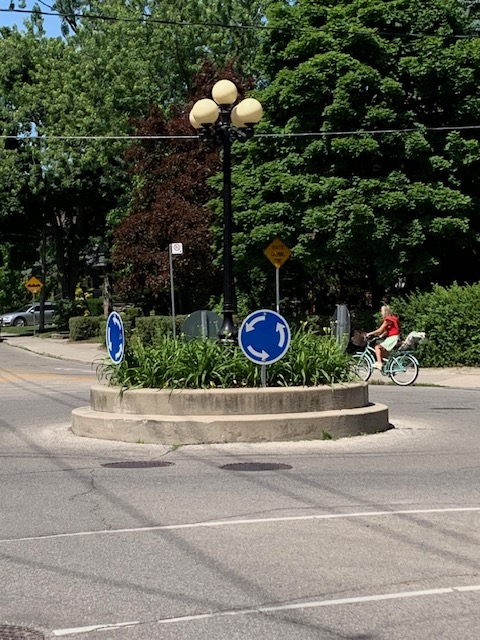
I wrote to you on June 18th about our first walk. We learned that Baby Point began its life as an Indigenous settlement in the 1600’s, then morphed into one of the first subdivisions in Toronto in the early 1900’s, along with another first – a roundabout! We have since gone on more of these walks, all of them interesting glimpses into Toronto’s past.
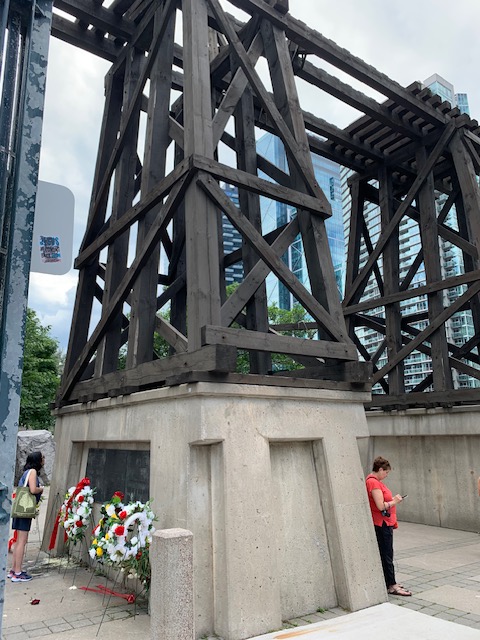
Then we went with another couple on the Rail Lands Walking Tour. The husband of the other couple is a train aficionado, but sadly we didn’t see even one train! What we saw were the places where railroad tracks, stations, maintenance facilities, and offices used to be. We were astounded to learn that the Rogers Centre, the Royal York Hotel, the Metro Convention Center, Roy Thomson Hall, and many intersections and parking lots were once part of the “ribbon of steel” which wove its way through our downtown. And we saw the monument dedicated to the thousands of Chinese immigrants who lost their lives while building this railroad.
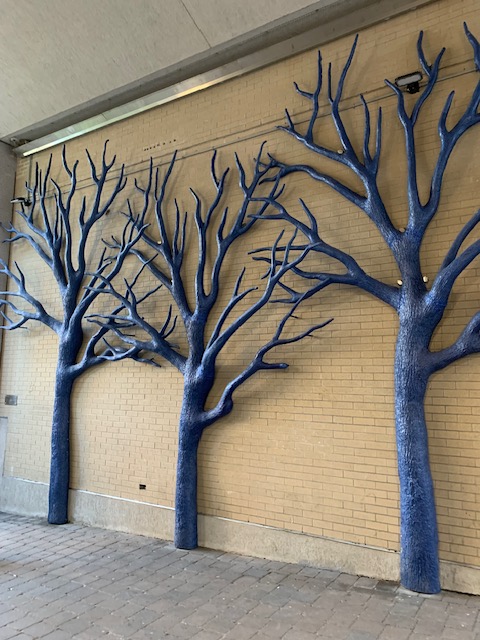
Our next walk was called Yonge Street Architecture. We started at College Park, erected by the Eaton family as the first Toronto department store. We visited the actual College park which was looking a little forlorn with very little grass, but it has a different life in the winter when it becomes a skating trail. We meandered through many parkettes and saw architectural treasures and public art works. It was an interesting glimpse of life behind the facade of Yonge St.
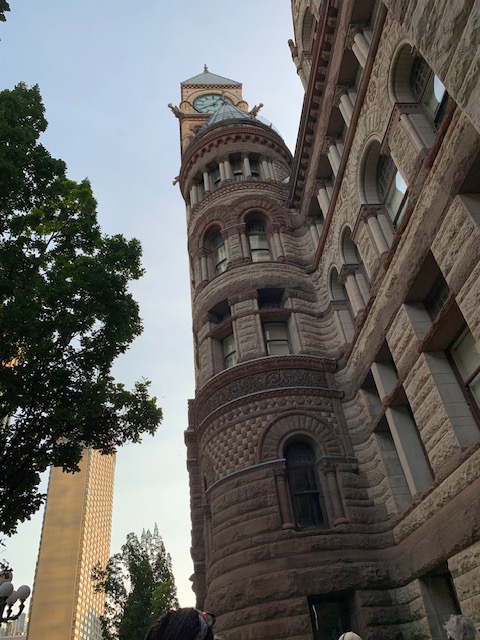
Then we walked to Old City Hall, designed by architect E J Lennox. His accomplishments include Casa Loma and over 70 other buildings in Toronto. City Hall incurred a cost overrun on construction, (that would never happen today!) so City Council refused to install a plaque in Lennox’s honour. As payback, he had his name engraved on blocks on the building’s exterior. If you look under the eaves of the upper floor, you can see these letters: E J LENNOX ARCHITECT 1899.
For our last walk, we chose a tour of Hidden Histories at U of T. We’ve wandered around the campus many times, both as adult students and as tourists, and we wanted to get the inside scoop. Our tour happened to be scheduled on a rainy day, which is quite common this summer, but this rainy day included thunder and lightning so we opted for tea at home instead.
There are lots of other tours to choose from, including Greektown, The Danforth, Little India, and one that sound ah… different: Garbageland Cycling Tour, in case you want to see the city’s trash. The cost per tour is under $10 per person, pretty reasonable for a chance to get some exercise and learn about Toronto’s past.
Sue


Thank you for sharing the walk and the beauties of Toronto.
By the way you made me look at my desktop’s calendar twice to make sure today is not Tuesday.😀
LikeLike
Thank you, Sue, for the trip down memory lane. You are so right about how walking trips connect one to a place. King doesn’t feel like that. My home town is such an interesting and colourful place still that it really still feels like home, though I hardly ever go anymore, and certainly never alone.
LikeLike